


From 30pct to zero: Former exco, NGO lament current N Sembilan all-male exco team
The absence of women thus far in Negeri Sembilan's latest exco team has raised concerns over its impact on state-level policymaking, amid a broader decline in women's political representation following four state elections over the past year.
Responding to Menteri Besar Ismail Lasim’s current line-up, former state exco Nicole Tan cautioned against reversing the progress made under former menteri besar Aminuddin Harun, whose administration achieved 30 percent women's representation in its line-up...
The absence of women thus far in Negeri Sembilan's latest exco team has raised concerns over its impact on state-level policymaking, amid a broader decline in women's political representation following four state elections over the past year.
Responding to Menteri Besar Ismail Lasim’s current line-up, former state exco Nicole Tan cautioned against reversing the progress made under former menteri besar Aminuddin Harun, whose administration achieved 30 percent women's representation in its line-up.
“During my time in the Negeri Sembilan administration, we had three women serving in the state exco.
“I believe this is important because women make up half our population, and their voices, perspectives and lived experiences deserve to be represented at the highest level of policymaking,” the Bukit Kepayang assemblyperson said when contacted.
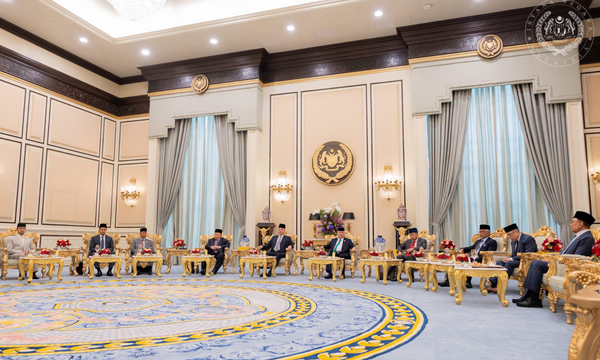
Yesterday, six assemblypersons were sworn in as exco serving under Ismail, more than two months after the appointments of all 10 previous exco members were revoked by Negeri Sembilan ruler, Tuanku Muhriz Tuanku Munawir.
Bernama reported yesterday that Ismail was still considering including women in the state administration, with portfolios yet to be assigned to the excos who have been sworn in thus far.
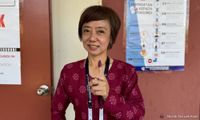
Besides Tan, who is the only female Pakatan Harapan representative in the state assembly, the remaining two women assemblypersons are BN’s Siti Nur Umaira Hasim (Labu) and S Leza Md Yasin (Pilah).
Siti Nur Umaira, who was among the 10 excos sacked by Tuanku Muhriz, previously held the women, family and community development portfolio.
However, Tan acknowledged that given the unique political situation engulfing Negeri Sembilan, the present line-up cannot be viewed “purely through the lens of gender”.
“Nevertheless, the end result is that Negeri Sembilan (currently) has no women in its exco. That is something we should reflect on.
“Women’s representation in leadership should not be incidental or dependent on political circumstances. We should be moving forward towards more inclusive representation, not backwards,” she stressed.
From three women to none
Reflecting on her tenure overseeing women's affairs, Tan recalled how she had established Power House Wanita Gemilang (PH GEM), a women's empowerment initiative which provided opportunities for women to participate in programmes and employed 16 women to run it.
“I also started an ‘Adun Sehari’ event to train women on how to debate in the state legislative assembly,” she added.
Tan, who was also the sole female exco member during Aminuddin's first term from 2018 to 2023, was the only woman from the previous state assembly to retain her seat in the Aug 1 state election.

In 2023, Aminuddin appointed three women to his 10-member exco line-up following the formation of the Pakatan Harapan-BN state government.
Aside from Tan, the other two were PKR's then Pilah and Ampangan assemblypersons Noorzunita Begum Ibrahim and Tengku Zamrah Tengku Sulaiman, respectively.
All three remained in Aminuddin's administration after four Umno excos vacated their positions in April this year, accounting for half of the six remaining exco members.
Women now make up 8.3 percent of the 36-member state assembly, down from 11.1 percent in the previous term, with the latest exco appointments also putting Negeri Sembilan alongside Terengganu as the only two states without a woman serving as a full exco member or state cabinet minister.
‘Disappointed, but not surprised’
Meanwhile, Persatuan Kesedaran Komuniti Selangor (Empower) executive director Gopalan-K Papachan said the development in Negeri Sembilan, pending appointments of other exco members, reflects a wider regression in women's political representation.
“Indeed, it is disappointing but not surprising. All the past four state elections since Sabah last year to Malacca this year have resulted in fewer women assemblypersons.
“Women make up half the voters, and yet their issues remain invisible to the manosphere which dominates not just the positions of leadership within most political parties but also the narrative,” he told Malaysiakini.
Expressing concerns over the implications of a potentially all-male executive council for state-level policies, he said the possible lack of women representatives in the line-up sends an “unhealthy signal” that women’s voices are not equally valued in state-level decision-making.

He identified several key policy areas which might not be prioritised without any women to advocate for them, including safety, welfare assistance for single mothers, religious affairs, healthcare, and economic empowerment.
His observation echoed the findings of Projek30%, an Empower-led campaign seeking legislation to compel political parties to field at least 30 percent women candidates in parliamentary and state elections.
Gopalan said the appointments for Negeri Sembilan’s exco team thus far underscores the need for a legal framework that steadily dismantles the patriarchal narrative and cultures while levelling the playing field for women.
Ahead of the Nov 14 Malacca polls, Projek30% highlighted a decline in the combined number of female assemblypersons in Sabah, Johor and Negeri Sembilan, from 26 to 19, following their respective state elections.
Malacca recorded a similar decline, from five to four female assemblypersons, bringing the total reduction across the four states to eight.


If your daughter asked why all six people sworn into the Negeri Sembilan exco were men, what would you tell her? We had three women in the exco under Aminuddin. Surely we can look our daughters in the eye and say there’s room for them at that table. Ismail still has appointments to make. He can show them there is.
Report this comment
Are you sure you want to delete this comment?
This action cannot be undone.