



COMMENT | From Baltimore to Kuala Lumpur, when impunity wears a badge
COMMENT | “We can do whatever the f**k we want.”
Pardon the French.
It is a quote from "We Own This City", a miniseries chronicling the rise and fall of Sergeant Wayne Jenkins, who led the Baltimore Police Department’s disgraced Gun Trace Task Force.
Its members engaged in widespread corruption and abuse of power, with several now in prison. Jenkins himself is serving 25 years after pleading guilty in 2018 to racketeering, robbery and falsifying records.
This was more than an expression of hubris.
It was a declaration of...
COMMENT | “We can do whatever the f**k we want.”
Pardon the French.
It is a quote from "We Own This City", a miniseries chronicling the rise and fall of Sergeant Wayne Jenkins, who led the Baltimore Police Department’s disgraced Gun Trace Task Force.
Its members engaged in widespread corruption and abuse of power, with several now in prison. Jenkins himself is serving 25 years after pleading guilty in 2018 to racketeering, robbery and falsifying records.
This was more than an expression of hubris.
It was a declaration of impunity, born of the belief that one is above the law. When the badge meant to protect and serve becomes a shield for those who wear it, the thin blue line separating the good from the bad begins to blur.
Fist rots from the head down
Baltimore is a long way from Kuala Lumpur.
But as I binge-watched all six episodes, earning an earful from my wife, who, despite appearing sound asleep, somehow detected that I had only crawled into bed at 5am (her sleuthing skills are unrivalled), I could not help drawing parallels with Malaysia, where allegations of extrajudicial killings and detainees being beaten to death continue to surface, year after year, decade after decade.

These are often accompanied by uncomfortable questions about accountability and whether those responsible will face consequences.
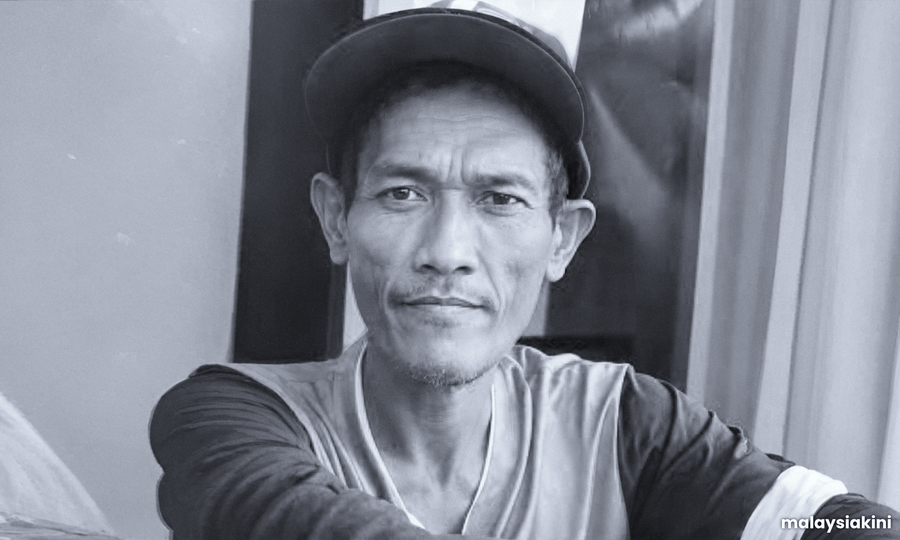
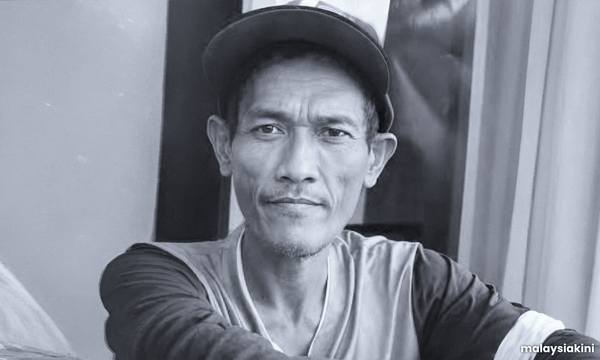
The death of Noorizwan Zulkefly brings those questions into sharp focus once again.
The HBO series also illustrates how the problem is institutional rather than involving one or two officers; as the saying goes, a fist rots from the head down. Rogue officers do not operate in a vacuum. Their actions are enabled by precedents that normalise abuse and by a system that allows misconduct to go unpunished or with nothing more than a slap on the wrist.
There is also the perception that criminals are undeserving of rights, a mindset reflected in how Jenkins referred to the drug dealers he robbed as “monsters”.
Despite stealing their cash and narcotics, and selling the drugs for profit, he somehow managed to cast himself as morally superior to those he preyed upon, even seeing himself as almost innocent and taking offence at being labelled a “dirty cop”.
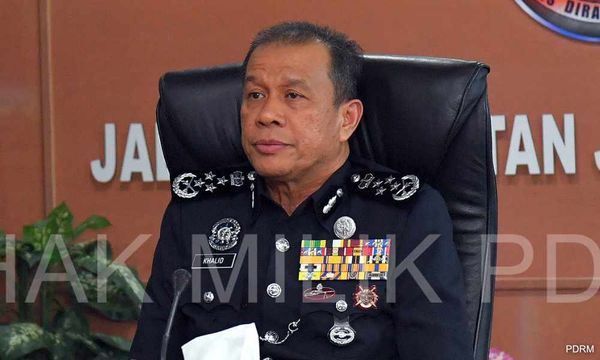
Kuala Lumpur police chief Fadil Marsus appeared to suggest the same when he revealed that Noorizwan had 44 criminal records, comprising 18 drug-related cases and 26 other criminal offences, and had also admitted to involvement in 17 other housebreaking and theft cases in the Cheras district.

In other words, it came across as an attempt to diminish the gravity of what happened to him in custody, or make the questions surrounding his death less deserving of answers.
Lack of political will
Compounding the problem is the lack of political will.
Those in power may be reluctant to antagonise a police force they can rely on to pursue their political rivals and critics or to insulate themselves and their allies from scrutiny. When enforcement agencies and other institutions become instruments of political agendas, holding them accountable becomes all the more difficult.
The failure is particularly galling given that the current prime minister himself was once a victim of such abuses, and his coalition spent decades promising to put things right.
READ MORE: 'I thought I wouldn't survive' - Anwar recalls 'black eye' incident
The conflicting accounts surrounding Noorizwan’s death and injuries further underscore the importance of an independent investigation. This cannot be settled by public relations statements or assurances that standard procedures are being followed and that an exhaustive probe will be carried out.
Perhaps the most disturbing aspect of "We Own This City" is the damage that corruption and abuse of power inflict on public trust in law enforcement. The series dramatises the challenge of empanelling an impartial jury when potential jurors may already be inclined to distrust police testimonies, given the Baltimore Police Department’s tattered reputation.

This is the long shadow of police misconduct. It undermines the credibility of honest officers and deepens the divide between law enforcement and the communities it serves.
When trust collapses, even legitimate police work becomes harder.
An accountable police force is not a weaker police force. Independent oversight, proper custody safeguards, effective complaint mechanisms and credible investigations into deaths in detention are not concessions to critics. Accountability should be an obligation, not viewed as an inconvenience.
Noorizwan’s family deserves answers, just as the families of A Kugan, who died in police custody in 2009 with horrific injuries, including V-shaped burns believed to have been inflicted with a heated object; N Dharmendran, who died in custody in 2013 with staples driven into his ears while he was still alive; and Ong Ing Keong, the deaf e-hailing driver who was punched in the face by a police officer who was merely fined a paltry RM1,000. The list goes on and on and on.
The public also deserves an accounting of how Noorizwan died in state custody. His criminal record, whatever it may be, does not diminish the responsibility to explain the circumstances of his death. Justice cannot be conditional on the character of the victim.
Through a racial, religious prism
Interestingly, Noorizwan’s case has also drawn calls for justice from political voices that are often conspicuously muted when the victim belongs to another race.
This underscores Malaysia’s troubling tendency to view even questions of justice and human rights through the prism of race and religion, with the victim’s identity often determining the volume of outrage.
The right to life, dignity and justice comes with no racial or religious caveats. When these universal principles are subjected to communal considerations, the damage goes beyond a fractured public response. It weakens the resolve to hold institutions wielding the power to account.
Ultimately, everyone suffers, regardless of colour or creed.
From Baltimore to Kuala Lumpur, the names and circumstances differ, but the fundamental question remains. Who watches those entrusted to watch over us?
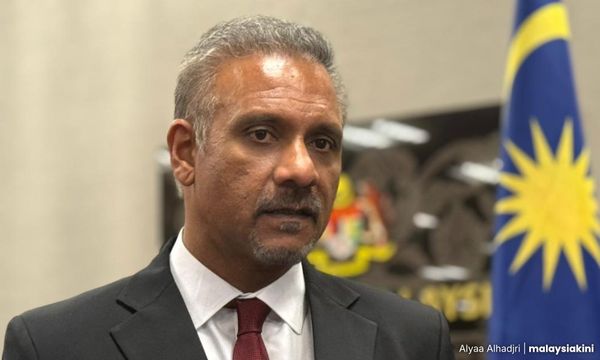
RK ANAND is a member of the Malaysiakini team.


IPCMC Now! Nothing less!
RK Anand's analogy between Baltimore and Kuala Lumpur is an important one that needed articulation. Both raise fundamental questions about the abuse of authority, institutional impunity and the failure of accountability. The deeper problem lies in the absence of a moral compass when developmental authoritarianism becomes the prevailing social contract. The badge, the uniform and the gun become symbols of authority seemingly beyond independent inquiry. Loyalty to the institution takes precedence over accountability to the rakyat, while obedience is mistaken for justice. Yet there is hope, and perhaps it lies not in Baltimore but in the most unlikely of places: Serbia. The emergence of the student-led movement and its "Student Lists" offers an alternative political imagination, one in which young citizens challenge entrenched authority through collective organisation, democratic participation and demands for accountability. Malaysia's younger generation might find inspiration in this experience. The real challenge is not merely to replace those who wield authority, but to dismantle the culture of impunity that allows power to operate without moral restraint or public accountability.
A very apt article - perhaps here it is even more serious as the mix of corruption, politics, race & religion come into play...thanks Anand...
Report this comment
Are you sure you want to delete this comment?
This action cannot be undone.