



COMMENT | Beyond Malacca: The 'Harapan Wave' has ended - Part 1
COMMENT | The outcome of the Malacca’s 16th state election (SE16) confirmed something I suspected in the night of the Johor state election: the “Harapan Wave” has ended – the momentum is dead although the body is still breathing.
This is part of my serial analysis on the big picture of Malaysia after Malacca.
In this part 1, I will first show an overview of the Malacca state election outcome and its potential projection onto the peninsula in the 16th general election (GE16).
Then, I will explain what I mean by the “Harapan Wave”, the political mobilisation model that knocked off BN’s two-thirds majority in the historic tsunami in 2008 and then defied predictions twice for Pakatan Rakyat/Harapan to win powers in 2018 and 2022.
Finally, I will analyse the...
COMMENT | The outcome of the Malacca’s 16th state election (SE16) confirmed something I suspected in the night of the Johor state election: the “Harapan Wave” has ended – the momentum is dead although the body is still breathing.
This is part of my serial analysis on the big picture of Malaysia after Malacca.
In this part 1, I will first show an overview of the Malacca state election outcome and its potential projection onto the peninsula in the 16th general election (GE16).
Then, I will explain what I mean by the “Harapan Wave”, the political mobilisation model that knocked off BN’s two-thirds majority in the historic tsunami in 2008 and then defied predictions twice for Pakatan Rakyat/Harapan to win powers in 2018 and 2022.
Finally, I will analyse the contradictions in this model, which explain its lethargy and end.
If you crave moral condemnations or endorsement of some saviours, stop here as you would be greatly disappointed. I attempt to only dissect the problems and consider the remedies.
Malacca and the peninsula: Harapan’s base line, ceiling and floor
While opinion polls and ground surveys had helped us to better understand the local nuances and dynamics, the outcome of the Malacca polls could be simply predicted from GE15 five years ago.
Disaggregate the 2022 votes by state constituencies, then combine BN and Perikatan Nasional votes, and you get exactly the 2026 outcome: Harapan retained the four seats it garnered a majority, and BN-PN won the rest.
The three slides below should help you to see it clearly.
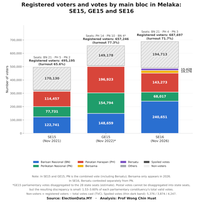
This first chart shows that the combined vote share of BN-PN almost stayed the same in GE15 and SE16, increased by only 5,125 votes.
Harapan, which contested only 24 seats this round, lost 53,650 votes, larger than the votes of both Bersama and Bersatu combined.
Considering that total voters had increased by 30,451, Harapan’s immediate rival was clear, not Bersama, not even BN-PN, but Pamu (Parti Aku Malas Undi) (those who did not vote).
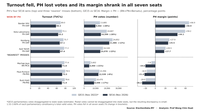
This second chart shows the detailed result of the four seats retained by DAP and the three “nearest” misses by prominent candidates from Amanah (former chief minister Adly Zahari in Bukit Katil) and PKR (the prime minister’s political secretary Azman Abidin in Paya Rumput and former state exco member Ginie Lim in Machap Jaya).
DAP lost significant votes in all four retained seats, ranging from -15 percent (Ayer Keroh) to - 28 percent (Bandar Hilir) (see graph at the centre).
However, because DAP had huge leads over BN in 2022, from 20.5 percent in Ayer Keroh to 66.9 percent in Bandar Hilir, even Ayer Keroh was still retained with a comfortable margin of 17.7 percent (see graph on the right).
Based on the GE15 voting pattern, all the three closest “near-miss” candidates from PKR and Amanah started with a handicap, ranging from -7.8 percent (Machap Jaya) to -19.0 percent (Bukit Katil) (see graph on the right).
These margins were nowhere “near”. But their deficits had been worsened, not just by the blue-green convergence, but also by the drop in their own votes, by six percent (Paya Rumput) to 21 percent (Machap Jaya) (see graph at the centre).
Lim might have a fighting chance in Machap Jaya if the turnout of Harapan base was high, but Azman and Adly could not possibly win unless they could swing 11-13 percent of voters to switch from PAS to Harapan.
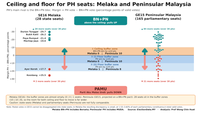
The third chart shows that Malacca (state seats) is only a poor status quo, not yet a nightmare for Harapan, as the peninsula (parliamentary seats) may turn out to be. Once BN-PN succeeds to pool their votes together, the baseline is drawn and the battlefield is at the margin.
In Malacca, the coalitions were so entrenched in the GE15’s territorial map that none of the seats became really marginal when the dust settled.
Machap Jaya (trailing by 7.8 percent) was the only marginal (disaggregated) seat in GE15 but no more in SE16.
For the peninsula parliamentary seats, Harapan and Muda held 71 seats but 28 of them would have gone to BN-PN if the latter’s voters had converged then, leaving Harapan with only 43 seats.
If Harapan can swing BN-PN voters or win enough absentees (Pamu), it may recover 10 seats (the functional equivalents of Machap Jaya).
While Harapan pushing its peninsula ceiling to 53 seats still would not be enough to win it the driver’s seat in Putrajaya, it would make BN decidedly a junior partner of PAS, making their cohabitation difficult to sustain.

But Harapan could also lose more seats if it loses more votes to Pamu. If its margin drops by 10 percentage points, it would be left with only 33 seats, of which DAP (25), PKR (6) and Amanah (2).
Drop another 10 percentage points, and Harapan would be left with 25 seats, of which DAP (21), PKR (3) and Amanah (2).
Effectively, Harapan would be gone. You can check out the marginal seats here.
‘Harapan Wave’ - What is it? How does it work?
To avoid any misunderstanding or misrepresentation, I am not saying that Harapan has ended or will end after GE16, or the Madani Government is about to collapse. How Harapan would evolve after GE16 depends on the outcome.
On the Madani government, I maintain my predictions in the past months: The prime minister can serve until Dec 18, 2027 as long as Sarawak and Sabah back him.
Umno dares not to pull out even with more state election victories because it fears to be left in the opposition while Madani survives its exit.

Students of democratisation used the metaphor of wave to describe the power shifts that see democracy advancing or backsliding.
I use “Harapan Wave” to represent the political mobilisation and statecraft of Pakatan Rakyat/Harapan that started with the rallies of Bar, Bersih and Hindraf in late 2007 that ushered in the 2008 political tsunami and ended Umno-BN’s electoral one-party state in 2018.
Here are three characteristics of this wave that I see: “righteous” mobilisation, majority-building and majoritarian governance.
“Righteous” mobilisation means voters come out to vote because they see other parties - BN and later PAS, Bersatu - as bad or even evil, because these other parties are racist, not Islamic, corrupt, tyrannical, too Islamic, and/or treacherous.
I use “righteous” instead of “ideological” both because the sentiment often may be personal/factional/partisan than just ideological and ideological differences do not necessarily lead to such intense antagonism.
This “righteousness” is of course a learned response on how BN demonised the opposition. It also existed in the previous opposition coalitions like Gagasan Rakyat (1990-1995), Angkatan Perpaduan Ummah (1990-1996) and Barisan Alternatif (1999-2001, effectively ended when DAP pulled out), reflecting a core feature of the two-coalition system these coalitions propelled.
It makes perfect sense in a straight fight under First-Past-The-Post (FPTP): maximise the product differentiations to build a strong band and call out the consumers. Powers are so concentrated, if we lose, we will have nothing, so we the good people must go out to vote and trounce the bad guys.
Majority-building – aiming for a legislative majority, which most often requires an electoral majority - sounds natural in any democracy but that is true only in countries that are accustomed with single-bloc majority government.
A rational response to the majoritarian political system, this orientation had brought DAP and PAS closer, mellowing both, when Umno split and produced a splinter party that could propel the opposition to win power.
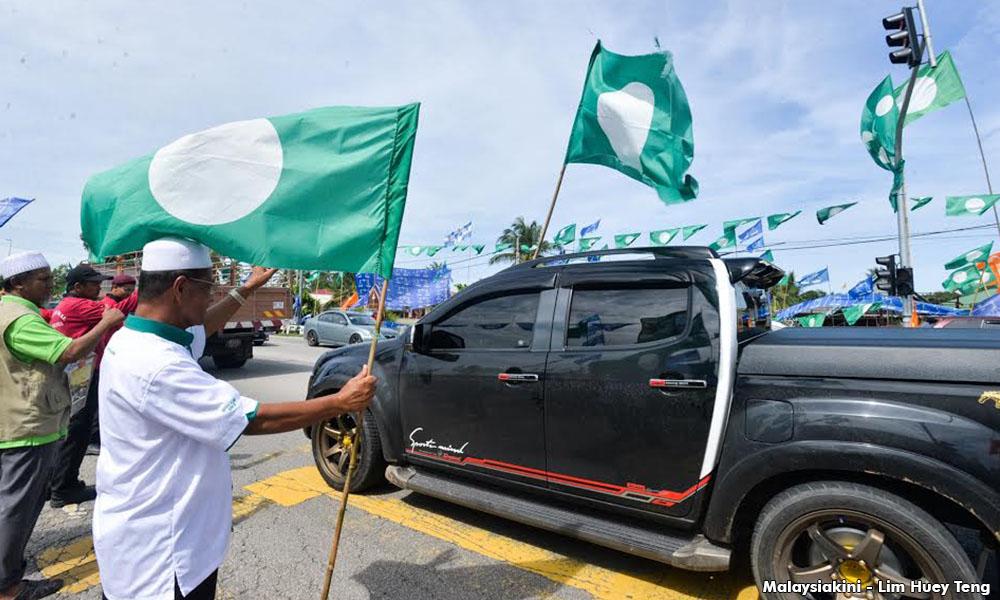
When PAS decisively left the multi-ethnic opposition of DAP and PKR in 2015, this void of right-wing Malay support was soon filled by the second Umno splinter, Bersatu.
The multi/non-partisan platform of Bersih, built by the three Pakatan parties in 2006 before handing it over to civil society leaders in 2010, drew in more middle-ground voters who rejected BN but might be uncomfortable with the opposition.
Majority-building contradicts with righteous mobilisation, but it is good for democracy and political stability.
Majority-building forces the elite in the Harapan camp to bury their hatches and the grassroots to embrace pragmatism for power. The righteous mobilisation is now targeting only the enemies, sparing the new allies.
Hence, PAS and DAP defended each other to attack Umno/BN as the much bigger common threat, and later former prime minister Dr Mahathir Mohamad and DAP did the same against Umno and PAS.
The sin of compromise
The sin of compromises that Harapan has committed in the eyes of its supporters-turned-critics is nothing new.
It was embraced as pragmatism by most of the Harapan’s base. It becomes a big issue today for two reasons: first, it has crossed some red lines for many but not all; second and more importantly, these compromises do not pay back.
While now speaking in very righteous tune, many Harapan supporters oppose only bad deals, not deal-making.
“Majoritarian governance” means governing by sidelining the losers. Losers can be included, but only if they are willing to be co-opted into the government, not if they want to stay as competition to the government.
This is why, despite their promise in both the 2018 and 2022 electoral manifestos, Harapan refuses to give equitable constituency allocation to all lawmakers, wanting to use it as a negotiation chip for support.
Of course, this use of patronage that erodes Harapan’s idealism - rightly criticised by former minister Rafizi Ramli - does not end here.

This majoritarian mentality exists not only amongst the Harapan leaders, but also amongst its liberal-minority base which contributed disproportionally to its victory and now shows the sharpest drop in turnout, as show in the four DAP seats in Malacca.
The liberal-minority base’s frustration is understandable because Harapan won power because of them but they were not rewarded in policy or fiscal terms, as compared to leaders and supporters of Umno as the junior partner.
One inconvenient fact that many overlook: the liberal-minority bloc never constituted a majority and will not for the foreseeable future.
In 2018, Harapan won a majority of seats (50.9 percent) on a plurality of votes (45.7 percent). Harapan did win a majority of votes (50.9 percent) in 2013, but that was with PAS. Interested readers can see the details here.
Why does ‘Harapan Wave’ end?
Some readers may ask now: isn’t the “Harapan Wave” that I describe much the same as the models of BN and PN?
Yes, except with some nuances. The Harapan model is very much an imitation of BN, a project starting from former minister Tengku Razaleigh Hamzah’s Gagasan Rakyat-APU in 1990. Flipped it, BN is the non-idealistic prototype of Harapan.
Coming from the same root, PN is effectively the Muslim nationalist splinter of Harapan.
So, why can PN hold its ground and BN make a comeback but not Harapan? To be fair, Harapan pulled out surprises twice in 2018 and 2022.
But these two episodes increasingly appear to me that they were just accidents. Harapan supporters were just plain lucky that Umno helped PAS to split its own base in 2018 and chose PKR president Anwar Ibrahim over Bersatu president Muhyiddin Yassin in 2022.

The “Harapan Wave” was useful until Harapan comes to power. It has ended because Harapan cannot win in the majoritarian game in government when it does not command a majority.
Both Muhyiddin and Anwar aimed to turn their coalition government into a super permanent coalition, the new BN if you wish. Both failed.
Harapan will never get to dominate the majoritarian game, because the Malay-nationalist constituency will not accept their exclusion or subordination.
And resorting to patronage to attempt that will only undo the idealism that Harapan was built for, and that is why many Harapan supporters do not vote now.
WONG CHIN HUAT is a political scientist at Sunway University and a member of Project Stability and Accountability for Malaysia (Projek Sama).
The views expressed here are those of the author/contributor and do not necessarily represent the views of Malaysiakini.
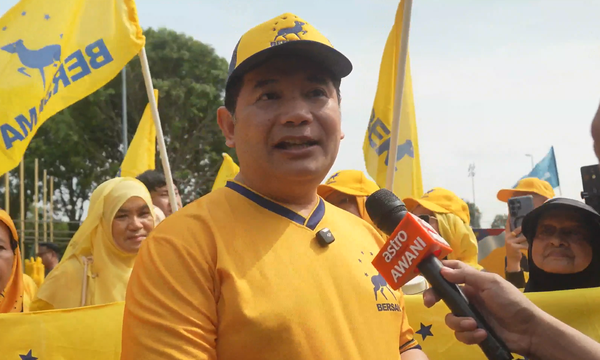





The Harapan wave is minority-inspired that can't last because it does not have the support of the majority. It joined forces with the majority parties in 2018 to form a government which collapsed because it wanted to impose on majority interests reforms which are not a priority for the majority for whom development and bread-and-butter issues are the over-riding concerns. It will die a natural death unless minorities are wiling to support majority interests as priorities and be willing to negotiate for incremental reforms for continued support until majority interests aligns with minority interests. The latter may take time. Harapan needs to rethink its strategies to fit current realities.
This article - how to say a lot without saying anything
BN would withdraw early, not to be left out in the cold, but to force GE 16, using the age old strategy that NR once called Cash is King. Its something one may assume they know well across the peninsula waters, given how '63 promises never materialised for 60 years. I wonder why.
Report this comment
Are you sure you want to delete this comment?
This action cannot be undone.