


COMMENT | Anwar waited 24 years to be PM - was it worth it for us?
COMMENT | For 24 years, Anwar Ibrahim’s name kept coming up whenever Malaysians discussed who might be prime minister next.
Several other men got the job in the meantime. Dr Mahathir Mohamad even came back for a second turn.
Anwar remained part of the conversation through his years in prison and, on Nov 24, 2022, finally took the oath himself.
Many of us expected more of Anwar because he wanted the job for so long. The wanting was part of his appeal. He was open about an ambition most politicians prefer to discover in themselves at the last possible moment.
More importantly...
COMMENT | For 24 years, Anwar Ibrahim’s name kept coming up whenever Malaysians discussed who might be prime minister next.
Several other men got the job in the meantime. Dr Mahathir Mohamad even came back for a second turn.
Anwar remained part of the conversation through his years in prison and, on Nov 24, 2022, finally took the oath himself.
Many of us expected more of Anwar because he wanted the job for so long. The wanting was part of his appeal. He was open about an ambition most politicians prefer to discover in themselves at the last possible moment.
More importantly, he made a case for why his ambition should matter to the rest of us. He had been a young activist detained under the Internal Security Act (ISA), a finance minister, a deputy prime minister and, after his sacking in 1998, a prisoner.
We tend to remember the two times Anwar went to prison after his sacking. He came out in 2004, went back in 2015, and received a royal pardon in 2018. Easy to forget that he was first detained in 1974, when he was a young activist.

In September 1998, the photograph of Anwar in court with a black eye shook the country. Only weeks earlier, he had been Malaysia’s deputy prime minister.
His sacking brought people onto the streets. Many of the activists who emerged in those years got their start in Reformasi.
His fall sparked Reformasi. While he was in prison, his wife, Dr Wan Azizah Wan Ismail, led Parti Keadilan Nasional, the party that grew out of the movement.
In 2003, it merged with Parti Rakyat Malaysia to form PKR, bringing an older tradition of left-wing politics into the new party.
Challenging the powers that be
Given Anwar’s own political journey and the history that brought him to power, I had two particular wishes for his premiership. Neither seemed too much to ask of a man whose political life had been so deeply intertwined with the struggle for democracy.
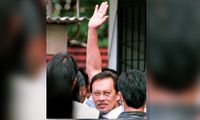
First, it was precisely because of this history that I had expected more democratic space under an Anwar premiership.
Here was a man who understood, from personal experience, what it meant to have the full weight of state power used against him.
Much of his political survival also owed itself to ordinary Malaysians who were willing to speak up, organise and take to the streets.
I had imagined that a government led by Anwar would be more comfortable with public dissent, more receptive to criticism, and less inclined to see political activism as a threat.
After all, these were the very democratic freedoms that had sustained his struggle for decades.
Four years on, I wonder whether we have been too preoccupied with who governs Malaysia and paid too little attention to how differently we are being governed.
I did not expect Anwar to transform Malaysia overnight, nor did I expect him to fulfil every reform promise. But I did expect a change in the relationship between the government and its citizens.
Malaysians should be able to challenge those in power without having their political loyalties questioned and protest against a government they may themselves have helped elect.

Surely, one of the ambitions of Reformasi was to build a country where citizens no longer needed to be particularly courageous just to exercise their democratic rights.
Lacklustre 3R management
Second, I expected more from Anwar on race and religion because this was an argument he seemed particularly well equipped to make.
He knew Umno from the inside and had led the Malaysian Islamic Youth Movement (Abim) before entering party politics. He had the political and religious credentials to stand before a Malay audience and challenge some of the assumptions that have shaped our politics for decades.
Whenever a politician declares that the Malays are under threat, from whom, exactly? Why should any one political party get to decide what it means to be Malay, or what makes someone a good Muslim?
Anwar has, on occasion, challenged such narratives. But I had hoped he would go further in questioning the very politics that makes Malaysians constantly suspicious of one another.
On Nov 24, 2026, the fourth anniversary of his premiership, Anwar told Parliament that despite his own reservations about the Sedition Act 1948, there was no suitable alternative to maintain racial harmony.

I found the timing rather ironic. Malaysians have been told all our lives to tread carefully around race, religion, and royalty (3R). Under Anwar, the term “3R” has become so familiar in our political vocabulary that we almost take for granted that these are subjects best avoided.
Of course, there is a distinction between inciting hatred and having an uncomfortable conversation.
But if, after nearly seven decades of independence, our racial and religious harmony still depends on the threat of police investigations and prosecution, what does that say about the kind of society we have built? I had hoped Anwar would help us find a different answer.
Anwar has outlasted many of the men who once sought to end his political career. It would be a great irony if the politics he spent so much of his life fighting were to outlast his own premiership.
I am less concerned about whether Anwar secures a second term than whether the next generation of Malaysians will inherit a country where they are freer to disagree with those in power and with one another.
Anwar waited 24 years to become prime minister. Many of us were waiting for a different kind of Malaysia.
KHOO YING HOOI is an associate professor at Universiti Malaya.
The views expressed here are those of the author/contributor and do not necessarily represent the views of Malaysiakini.





Definitely not worth all the hope pain and wait I endured. Regret very much but we all make mistakes but this is one big mistake I made of placing too much in him for a better Malaysia.
With hindsight , not worth for Rakyat who walked the streets.
PMX, in addition to fulling the promised constitutional reforms(while having the 2/3 majority) should also be planning his successions rather than going for another term.
Report this comment
Are you sure you want to delete this comment?
This action cannot be undone.