


COMMENT | If corruption is systemic, where are govt's reforms?
COMMENT | During RTM's “Dialog Negara” programme on Nov 25, Prime Minister Anwar Ibrahim acknowledged that corruption in Malaysia had become systemic, describing it as a problem inherited by his administration.
His acknowledgement is significant: systemic corruption demands systemic reform. Yet four years after coming to power on a platform of institutional reform and anti-corruption, what has the Madani administration actually done to dismantle the institutional architecture that enables grand corruption?
Anwar cited the corruption charges brought against his former senior political secretary, Shamsul Iskandar Akin, stating that he had not interfered with the investigation.
However, there is a fundamental difference between a prime minister choosing not to interfere and a premier being prevented by institutional safeguards from interfering.
Four years on, can Malaysians confidently say that...
COMMENT | During RTM's “Dialog Negara” programme on Nov 25, Prime Minister Anwar Ibrahim acknowledged that corruption in Malaysia had become systemic, describing it as a problem inherited by his administration.
His acknowledgement is significant: systemic corruption demands systemic reform. Yet four years after coming to power on a platform of institutional reform and anti-corruption, what has the Madani administration actually done to dismantle the institutional architecture that enables grand corruption?
Anwar cited the corruption charges brought against his former senior political secretary, Shamsul Iskandar Akin, stating that he had not interfered with the investigation.
However, there is a fundamental difference between a prime minister choosing not to interfere and a premier being prevented by institutional safeguards from interfering.
Four years on, can Malaysians confidently say that another scandal of the magnitude of 1MDB would be significantly more difficult to perpetrate?
Institutional independence and executive power
The 1MDB scandal exposed the dangers of concentrated executive authority and inadequate institutional safeguards.
Yet under Section 5(1) of the MACC Act 2009, the chief commissioner is appointed by the Yang di-Pertuan Agong on the advice of the prime minister.
The Organisation for Economic Co-operation and Development’s (OECD) 2026 Economic Survey of Malaysia noted that its earlier recommendation to involve Parliament in this appointment had yet to result in legislative action.
Similarly, the separation of the attorney-general and public prosecutor’s offices remains unfinished. Creating two separate offices without independent appointments, security of tenure and safeguards against executive interference would fall short of substantive reform.
The 2023 discharge not amounting to an acquittal (DNAA) granted to Deputy Prime Minister Ahmad Zahid Hamidi in the Yayasan Akalbudi case, followed by the Attorney-General's Chambers' decision in January 2026 to take no further action, illustrates the importance of prosecutorial transparency.
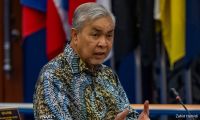
According to an October 2026 parliamentary reply, courts issued DNAA orders in 19 criminal cases involving 12 politicians between 2010 and July 2026.
While these decisions span several administrations, they reinforce the need for accountability in the exercise of prosecutorial discretion.
Governance without addressing political interference
The Royal Commission of Inquiry (RCI) report into Tabung Haji, made public in July 2026, identified political interference in institutional decisions, including profit distributions and haj charges, extensive ministerial powers and inadequately defined criteria for board appointments.
READ MORE: RCI: Governance failures, politics, 'creative accounting' led to Tabung Haji's financial crisis
It found that full application of the relevant financial reporting standards would have resulted in Tabung Haji recording a net loss of approximately RM1.4 billion in 2017, instead of its reported RM3.4 billion profit.
The governance concerns documented in the RCI, alongside those identified in official investigations into 1MDB, Felda Investment Corporation and the littoral combat ship (LCS) project, underscore the importance of institutional independence.
Proposed amendments to the Tabung Haji Act, including a prohibition against appointing active politicians, are targeted for tabling in 2027.

But why should such safeguards be confined to Tabung Haji? More fundamentally, who determines whether a politician is active or inactive?
Does resigning from a political position extinguish political loyalties, obligations or influence? Institutional safeguards must address actual, potential and reasonably perceived conflicts of interest.
The OECD's 2026 survey also noted the absence of formal policy or legislative changes addressing its earlier recommendations on merit-based appointments, minimum qualifications and cooling-off periods for former officials in state-owned enterprises.
Political patronage appointments must be prohibited across GLCs, government-linked investment companies (GLIC) and statutory bodies entrusted with public wealth.
Rather than introducing additional layers of “tatakelola” (governance), the government must address the political interference that undermines governance in the first place.
Without comprehensive political financing legislation, the relationship between political donations, corporate appointments, government contracts and business interests also remain inadequately regulated.
Legislative reform or reform whitewashing?
The introduction of legislation should not automatically be regarded as evidence of meaningful reform.
The Government Procurement Act 2025 must be assessed against whether it sufficiently constrains ministerial discretion, restricts procurement exemptions and provides independently enforceable accountability mechanisms.
The LCS controversy demonstrated that procurement failures extend beyond contract awards to contractual variations, implementation and supervision.
READ MORE: KINIGUIDE | A littoral dive into the navy's RM9b LCS scandal
Similarly, amendments to whistleblower protection legislation must be assessed against whether individuals can safely disclose wrongdoing through independent channels and obtain effective remedies against retaliation.
Where legislation preserves the discretionary powers and institutional dependencies it was intended to address, it risks creating an appearance of reform without delivering substantive institutional change.
The benchmark must be the substance and enforceability of legislation, not the number of laws passed.
G2G arrangements, investments without accountability
C4 Center's March 2026 research report on Malaysia's steel industry, which examined the Malaysia-China Kuantan Industrial Park (MCKIP) and Alliance Steel, highlighted challenges in accessing information concerning investment incentives, corporate ownership, environmental compliance and bilateral economic obligations.
These concerns relate to institutional safeguards and do not, in themselves, establish unlawful conduct by the companies concerned.
Nevertheless, inadequate disclosure makes potential conflicts of interest, regulatory capture and preferential treatment more difficult to identify.
Similar transparency concerns surround data centre investments, with the government estimating daily water requirements of approximately 445 million litres across Selangor, Johor and Negeri Sembilan over the 2025–2030 planning period.

While the government celebrates billions in investments, who bears the infrastructure costs? What fiscal incentives have been granted? Are the economic benefits proportionate to the environmental and fiscal costs?
Freedom of information legislation must encompass economically significant bilateral agreements. Commercial confidentiality and diplomatic sensitivities must not become blanket justifications for withholding information concerning public resources.
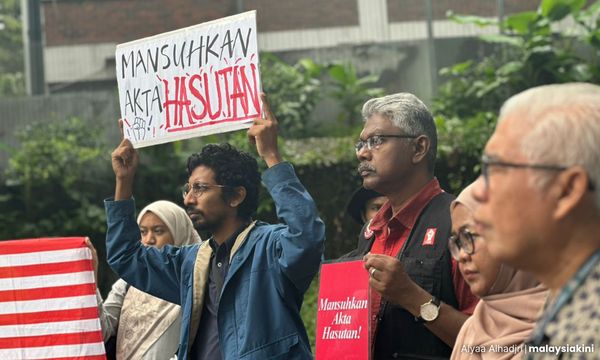
A striking contradiction is the administration's continued reliance on restrictive legislation, particularly the Sedition Act, which Pakatan Harapan previously opposed.
According to a February 2026 parliamentary reply, investigation papers opened under the Sedition Act rose from 52 in 2022 to 125 in 2023, 96 in 2024 and 142 in 2025 - the highest annual figure in the available records covering 2010 to 2025.
Malaysia's World Press Freedom Index ranking also deteriorated from 88th in 2025 to 95th in 2026.
The continued application of restrictive laws raises concerns about their chilling effect on legitimate public-interest scrutiny.
Investigating allegations of wrongdoing is fundamentally different from investigating those who raise them. Combating corruption while restricting the civic space necessary to expose it is fundamentally contradictory.
Reform must constrain power
More governance, integrity pledges and assurances of non-interference cannot substitute for legally enforceable institutional safeguards.
Malaysia needs independent investigative and prosecutorial institutions, an end to political patronage appointments, comprehensive political financing legislation, independently verified asset declarations, an independent ombudsman, freedom of information and effective parliamentary oversight.

The ultimate test of institutional reform is not whether those in power promise to exercise their authority responsibly. It is whether institutions are capable of holding them accountable when they do not.
Economic achievements cannot substitute for institutional accountability. Nor should Malaysians have to rely on the personal integrity of whoever occupies the prime minister's Office to protect the country from grand corruption.
If corruption is systemic, the response must be systemic too. Reform must constrain power, not merely improve the appearance of its exercise.
PUSHPAN MURUGIAH is an independent researcher and adviser on governance, integrity and anti-corruption.
The views expressed here are those of the author/contributor and do not necessarily represent the views of Malaysiakini.



In four years, the Pakatan Harapan-led Madani government has widened the Auditor-General’s powers to follow public money into companies receiving government funds or guarantees. It passed the Government Procurement Act, which provides a way to challenge procurement decisions, including the finance minister’s. It also amended the Whistleblower Protection Act to establish a committee to oversee protections for people who come forward. PMX is right that corruption is deeply entrenched. Six decades of entrenched practices take time to undo, and Madani should get credit for the changes it has made. I still want to see an independent public prosecutor, a role for Parliament in MACC appointments and a proper political financing law. I’d replace the Sedition Act with a narrowly written law against deliberately inciting violence or hostility based on race or religion. Call it a Harmony Act if you like. What matters is that Malaysians can still criticise the PM, question who got a government contract and report suspected corruption without fear.
"......Anwar Ibrahim acknowledged that corruption in Malaysia had become systemic, describing it as a problem inherited by his administration. His acknowledgement is significant: systemic corruption demands systemic reform. Yet four years after coming to power on a platform of institutional reform and anti-corruption, what has the Madani administration actually done to dismantle the institutional architecture that enables grand corruption?" Madani has DONE NOTHING to curb systemic corruption for the last four years. NOTHING AT ALL. However, he did two things to curb corruption: 1) Keep talking, talking and talking. Quoting verses from hadith, kural, etc. 2) Secondly, curbing corruption has become a sanitisation process via DNAAs, DAAs, mercy and compassion in the form of discounted pardons and house arrest. The above two are his logic of 'zero tolerance for corruption." Of course, 'ikan bilis' will be grilled, caught, and charged, but the sharks and whales roam freely and are treated like 'anak emas.' "Ikan bilis" are used as a charade to suggest that the fight against corruption is ongoing.
Pmx grade in reforms : D- ( F = Failed ) and should not be given a 2nd term
Report this comment
Are you sure you want to delete this comment?
This action cannot be undone.