


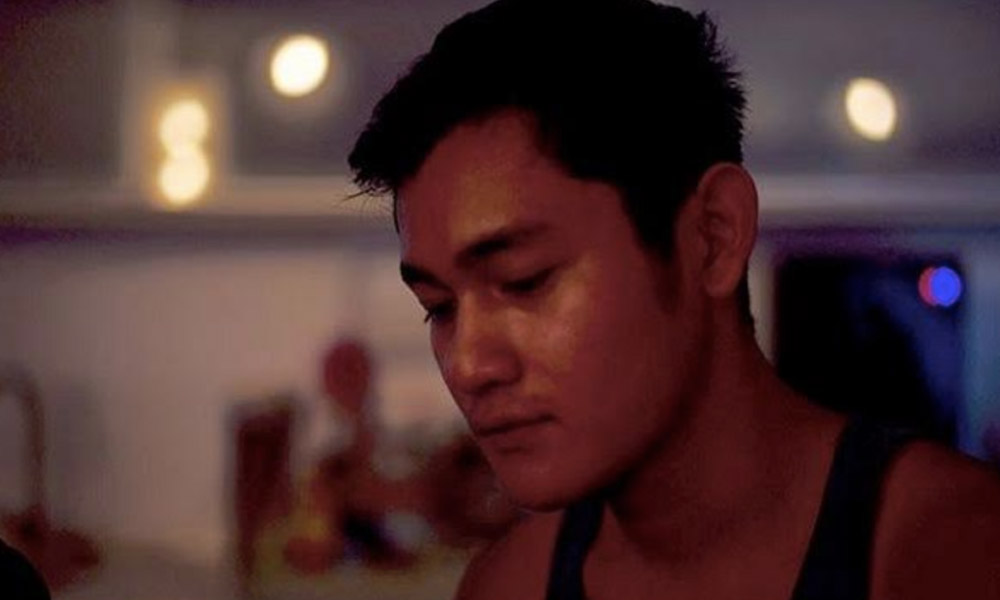

Actor Ali Alasri dreams of refuge for creative thinkers
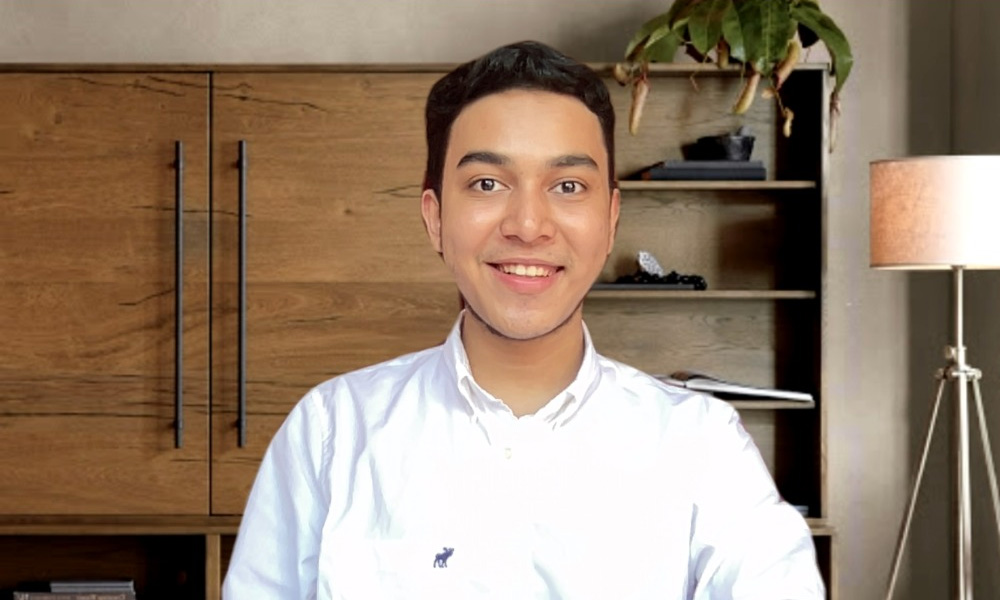
MALAYSIANSKINI | When asked about his dreams for the future, actor and artist Ali Alasri explains how he imagines himself starting a school for creative thinkers and the displaced - which he describes as a space of refuge.
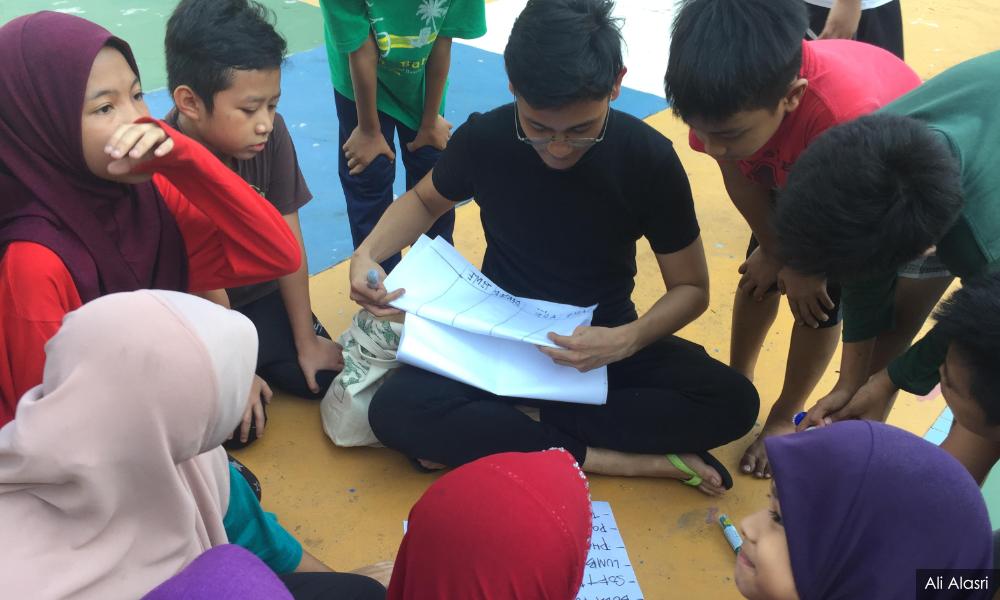
“I enjoy teaching. I finished (my diploma) at Sunway (University). I appreciated that, and I came back and taught at Sunway as a part-time lecturer.
“Even engaging in my research and having my sample participants is a constant learning process!
“I want to have a space that allows for that culture lah,” he told Malaysiakini in an exclusive interview.
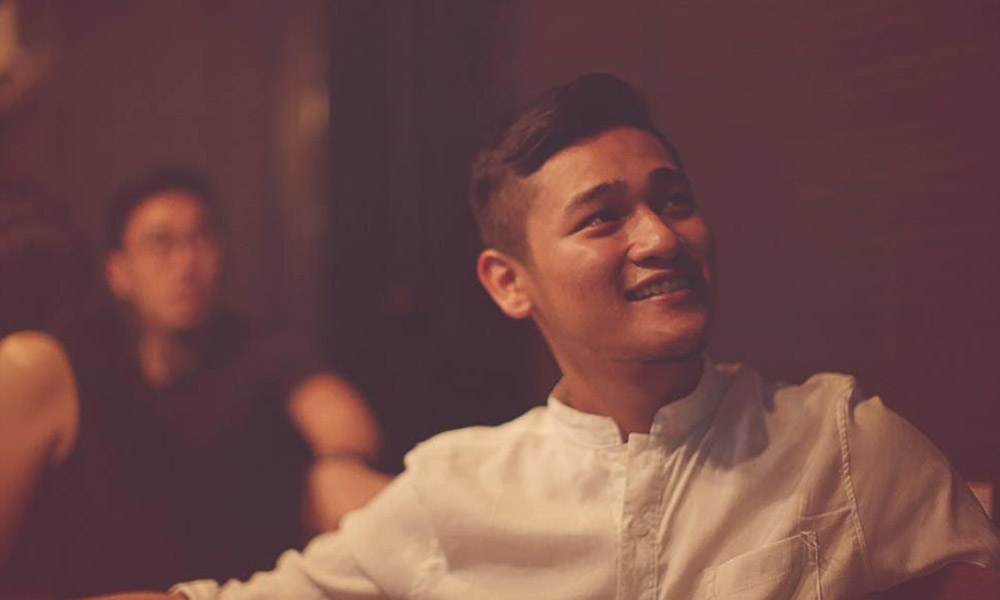
Born into a family of four, Ali (above) had always been drawn to making art.
As a child, this took the form of scribbling on school desks to get reactions from his teachers....
MALAYSIANSKINI | When asked about his dreams for the future, actor and artist Ali Alasri explains how he imagines himself starting a school for creative thinkers and the displaced - which he describes as a space of refuge.
“I enjoy teaching. I finished (my diploma) at Sunway (University). I appreciated that, and I came back and taught at Sunway as a part-time lecturer.
“Even engaging in my research and having my sample participants is a constant learning process!
“I want to have a space that allows for that culture,” he told Malaysiakini in an exclusive interview.
Born into a family of four, Ali (above) had always been drawn to making art.
As a child, this took the form of scribbling on school desks to get reactions from his teachers.
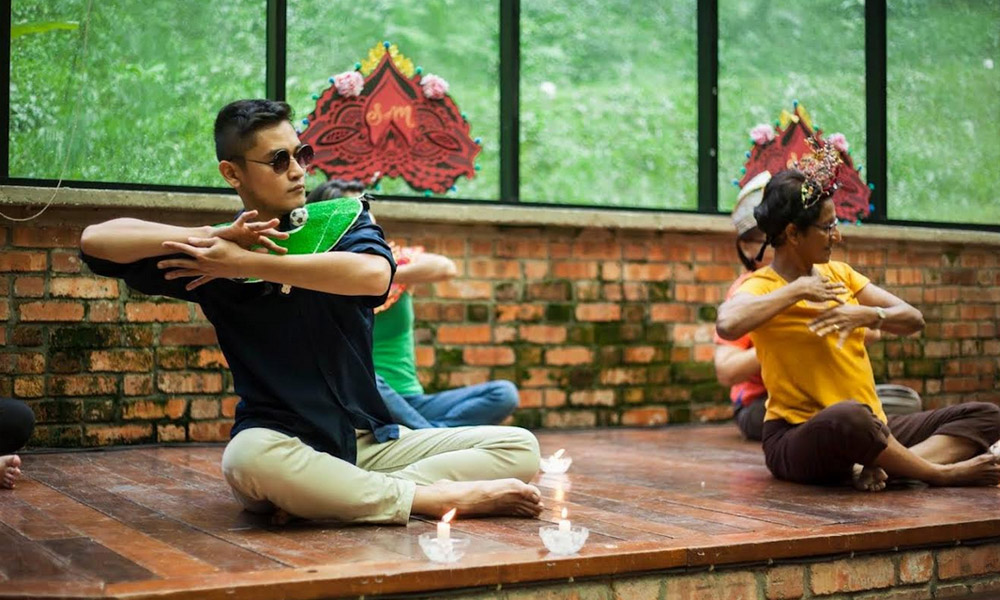
Now, Ali - who is undertaking his Masters at Universiti Malaya and is also a researcher - finds himself in an array of projects from researching the Malaysian network of art collectives to acting in playwright Leow Puay Tin’s plays - such as 'Are You Game, Sau(dara)?' and 'The Carer’s Monologue & Chorus'.
“I’m very influenced by my mother. She works at the National Art Gallery and I grew up with her going through a lot of artworks with artists as a curator - up until today!
“So, I always felt this life, and the need to take care of it,” he explained.
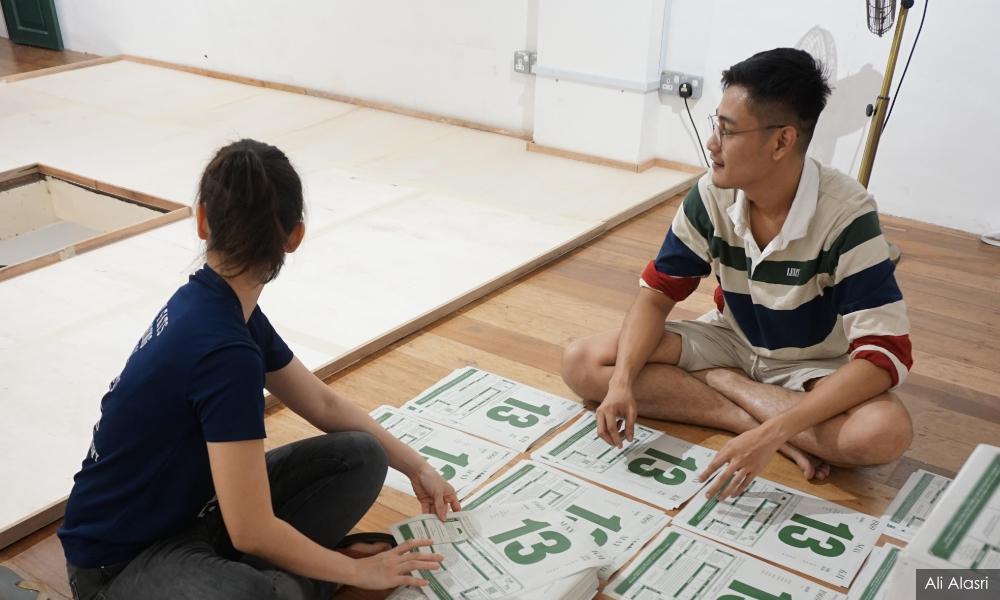
His most recent artwork - as part of an exhibition responding to the May 13 incident - was entitled "Belas Masa" and saw Chinese lunar calendars perched on white pillars.

Each calendar showed the date May 13 on it, but with different fragments of information, often in two or three different languages representing the diversity of the cultures and languages of communication. Scanning a QR code on the calendars would take you to the source material for further investigations.
He explained how carrying out research for this particular work helped him connect to the burden carried by his grandfather, who was a policeman during the May 13 incident.
“(On my mother’s side), my grandma's Chindian and my granddad is Malay. On my dad’s side, my grandmother is Chinese-Malay, and married a Javanese.
“Today, I still see them but I was born in 1993. So to me, I felt that it was normal. Speaking English - it was normal.
“Doing the May 13 work... It really helped me talk to my granddad.
"My grandma has dementia. But what unfolded was that I realised the baggage of his trauma, that my granddad had as a policeman, and the displacement he felt as a person who was trying to uphold the law.
“Being Malay, he was faced with adversity from the Chinese, and being (part of the) police, (he was faced with) adversity from the Malays,” said Ali.
He added that he feels that race doesn’t have a special place in today’s Malaysia.
“If we bring it to today, I don't know... I don't think race has a special place, but I think it plays a role in culture - the language we speak, what we eat, how we practice our beliefs.
“Unfortunately, it is not only that. As we know, our Federal Constitution has a special provision providing special rights for Malays and, of course, bumiputera.
“In an everyday Joe's life, it is literally from what we eat, to how we speak, to the differences in how we celebrate and also respect.
“In the law in the eyes of the officials and the nonliving records of identity, it is very concrete and it demarcates very clearly about your land rights, your marriage rights, your child rights, and where you are permitted to be or not.
“It is around. It is limiting everyone,” he said, adding that there is a clear racial gap on paper.
He remarked that even today, many limiting acts in our legal system still exist.
“Even when our (May 13) exhibition was about to be released, Muhyiddin pulled off the emergency ordinance on the day itself,” remarked Ali.
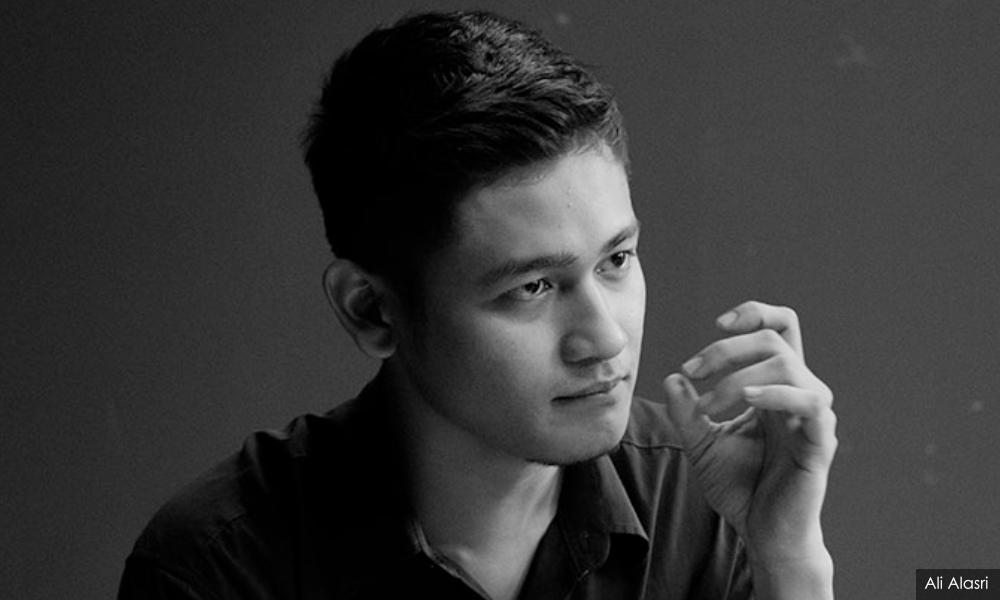
Reflecting on his upbringing, he pointed out that his worldview could possibly differ vastly from a person who did not grow up in the same environment.
“Oh my god, I grew up in a place where I believed (in the) five principles (of the Rukun Negara) and then layan my friends and my community.
“On another spectrum, somewhere, someone is using that to threaten the sanctity of their own race (and pitting it ) against the others. It’s the same document, on a way different tangent!
“How do we then deal with these different remnants that are left behind and how do we unpack that?” he asked.
Here is Ali’s story in his own words:
I think my research-based projects have a lot to do with my collaboration with Five Arts Centre - meaning to say that their works are very original, in a sense where most of the writings are self-produced and it comes from the self-learning of the artist themselves.
When you have that, you don't exactly see applications of Western plays. You see their own stories being told. I think that kept me curious, ever since I graduated from Sunway. And then, given my nerdiness, I just ended up finding ways in which I could meet research with art - because I saw a lot of useful works that were dealing with both art and politics.
There was a performance by an Indonesian artist Tita Salina and her husband Irwan Ahmett. So essentially, they came over and they talked about the trails of pirates around Southeast Asia, and made a performance documentary of how to be a pirate!
What happened was that they broke down the different trade routes within the sea, and then the relationship between regions and how the limitations of borders - when you go to the sea, there are no borders. So, I enjoy addressing how art talks about real-world conflicts. That (has to) come from a lot of research, because if not, then, you're not accurate at representation.
On the need for patience in artmaking - I realised that there's a lot of instant gratification, instant works, instant process. When you're online, taking a photo, you know, it's very quick. It's not necessarily slower.
Whereas, when I was in school, we were referring to old artists that may spend a few years making their works before they got famous - those who may have to die first before they got famous or, rather, before their work is valued on an institutional level.
It took a while, it took decades - but the urge to make works and reach that particular point within a one-year production without expectations of knowing how knowledge grows can be very disappointing. I think that contributes to the burnout of many young artists.
There's always a lack of support. You have organisations, you have bodies that want to nurture the community, for sure, but this community, in itself, changes.
We go into a particular group, you find that particular worldview, and I don't think institutions are aware of the need to kind of congregate this and talk about this on a larger level.
Once you come in, it talks about freedom of expression and the kind of work that is important - SOPs, procedures, laws, which are components that are not necessarily sensitive to the arts.
The Sedition Act, the Printing Presses and Publication Act - all these different acts that are placed to limit freedom of expression is not something that is necessarily known by an artist.
If artists were to be aware of these acts, and utilise them in such a way that they can produce work, that mastery could take a while but then look at the work of Iranian filmmakers.
I don’t think Malaysia has that awareness across sectors, across disciplines. I think it’s important when you talk about research, it’s not just about reading. It’s about connecting. It’s a whole thing to be unpacked.
Going to Hubs For Good (a programme commissioned by the British Council and Yayasan Sime Darby last year - to understand creative hubs within the Malaysian context and how to empower them)...
It wasn’t just work. It was an opportunity to connect with different bodies and different communities. We got to talk to young initiatives like Projek Rabak from Ipoh. I even got to talk to representatives from the United Kingdom and go to Indonesia to hang out with Kunci Cultural Studies Centre to understand how arts collectives function in their countries.
To have that two-year process of mapping and coming up with a 60-page toolkit on how to survive the arts was something that responded to this lack thereof (a clear path within the industry) and the need to know the laws, business licences, budgeting - these non-art things that influence your artmaking.
There is artistry in managing this nitty-gritty, but it hasn't been framed as such.
With the arts, it’s a highly unregulated field. Many are working without contracts. You know, they're working on social debt. But with proper “black and white” and a reference point to discuss, if not, debate, at least, there is a concrete discussion rather than, you know, abuse. I think these past Covid-19 years have shown a lot of abuses in the arts.
On how the pandemic has affected work - It has delayed a lot and I think it has affected a lot of people in a personal way. Trying to slow down was a good thing - although painful - because like I said earlier, we, at least my generation, are very keen on producing, making things, chasing a certain quota for some reasons, because artists get very excited (laughs).
With Covid-19 and not having the ability to do things, it really helps to stop and think. When that happens, you end up making a much more focused and sustainable practice. For example, if you look at Panas Panas Theatre, they started just by reading (scripts) online - I joined once in a while - but they only started doing that only because they couldn't run, couldn't make shows and go to rehearsals.
Now it has grown bigger beyond them. They have invited artists from India, from Australia, from America, to invite local artists to talk to local playwrights on this platform, and nobody's getting paid. This comes with a year of doing readings with amateurs and then they get recognised. Now, they are running the Women’s Theatre Festival.
So, it really is about focusing and scaling the practice today - starting small and letting it grow because Covid-19 is really unpredictable. We need things that are stable, and that we can control, not dismissing that we are not being ambitious. We’re just being careful.
If I wasn’t acting or making art, I would probably be in healthcare because my baby is now in the hospital. She’s three months old already and I came to realise the depths of (the) healthcare (system).
I found it very interesting because it means getting scared of the different diagnoses and you will also remember who you are, literally, in a material sense. You remember your organs, you remember how you breathe…
Being in the hospital, I hang out with the baby but when I go to buy the medicine, I’ve seen Covid-19 bodies being brought in.
It’s very real there, versus the statistics on Covid-19 now. It’s very real when you’re there.
To have this reality not felt on a larger scale is quite sad but I’ve grown to learn empathy because my dad survived Covid-19 too. It took him two weeks to sort it out - one week, self-monitoring and the next week in hospital - and that cost RM10,000.
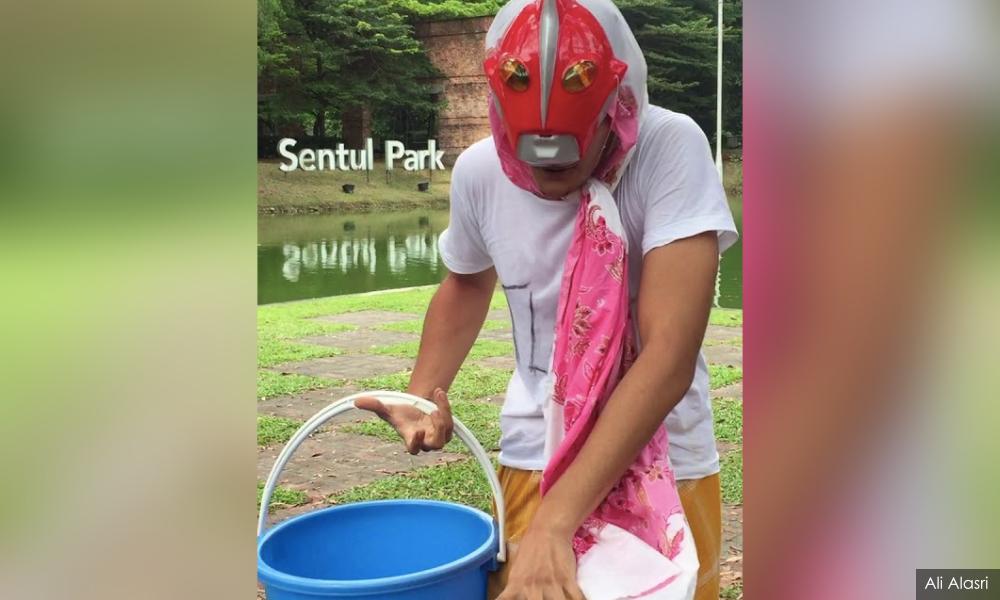
Acting was surprising for me too. Now, people call me for those things (acting) but making art was something I really enjoyed doing as a kid. I just liked doodling on tables, and seeing how the teacher would react.
That attitude carried through with me - and being around my mum, seeing different forms of creative belief. It’s hard for me to see paintings, TV shows or listen to songs. I don't see those. I see what is being written.
There is an awareness that I look forward to today, but before this, I really just enjoyed making things that are different but not in line.
I finished school and I didn't want to read books anymore. It was the first impetus but now, I read a lot. I was figuring out what to do post-SPM. Suddenly, there was this thing called filming and theatre - cool!
When I went in (to study performing arts), I eventually got A's. “Wow, I’m pretty good at this!”
From then on, I reconnected with my mom (on art).
I wasn't looking for it. It was always around me. And I just needed to find my place in it, which I'm still finding today. It’s not a finished thing.
The most memorable moment of my career so far… It’s hard. Maybe it’s because you’ve caught me today… One thing I can’t forget is this performance I did in Centre 42, Singapore - directed by Fasyali Fadzly - called ‘Are You Game, Sau(dara)?’. This was in 2019.
We were revisiting a play by Leow Puay Tin’s, ‘Three Children’, and there was a scene where I had to carry a baby and accept that my wife had sold her. It’s a bit morbid. Performing (that) at that time, I was acting, representing loss.
But, just undergoing that (struggle) now with my baby, that particular scene keeps coming back to me. I think it’s just deeper than a father with a dying kid. There’s more to that.
When I’m not working, I’m gaming. I really like role-playing games (RPG) because it opens up a different world but it reminds me of home.
Games are the edge of art making because of the amount of writing, storytelling, performance, acting, curating of moments for gameplay for the audience. I think that’s why I’m always there - playing games - because that’s the pinnacle of art.
Games and pop culture, that’s my hobby.
Who inspired me to do what I do… my mum inspired me to start to care for the arts - not to say, I didn’t care but to really care for it as a community, as carrying on traditions and on knowledge versus caring for it for the creative economy.
Who inspires me today… it’s my wife. Just because, you know, to see this person in life and still making her artwork through writing scripts, putting her capabilities is very inspiring for me to continue on.
And very useful because it is tough for us as artists in the pandemic to be inspired and she was - even while giving birth. The women in my life have been very, very, very strong figures for me to look up to and care for.
MALAYSIANSKINI is a series on Malaysians you should know.
Previously featured:
From party animal to animal conservation artist
The Malaysian dentist who just umpired an Olympic final
Standing up to defend Penang’s fishing community
Captain Planet to Family Frontiers - Activist's long journey to save forests, families
Half-Malay, half-Chinese Jamaliah sees bridging racial divide as key
Losing his father helped shape Khor's commitment to public health policy
Filmmaker Hidayah confronts past in gripping documentary Ayahku, Dr G
Grieving Yuna doesn’t want return to old normal but a better world


Report this comment
Are you sure you want to delete this comment?
This action cannot be undone.