




Heavier fines needed to deter banks from prioritising profits over compliance, say journalists
Fines imposed on Deutsche Bank for compliance failures must be substantially higher to deter it from prioritising profits over efforts to prevent money laundering, two journalists involved in an investigation into the German banking giant have said.
Speaking on KiniTV’s “Explain Sikit” podcast, Aidila Razak and Vivian Yap said banks must balance the cost of maintaining extensive compliance systems against the potential penalties for allowing suspicious funds to pass through their networks.
Aidila...
Fines imposed on Deutsche Bank for compliance failures must be substantially higher to deter it from prioritising profits over efforts to prevent money laundering, two journalists involved in an investigation into the German banking giant have said.
Speaking on KiniTV’s “Explain Sikit” podcast, Aidila Razak and Vivian Yap said banks must balance the cost of maintaining extensive compliance systems against the potential penalties for allowing suspicious funds to pass through their networks.
Aidila (above, right), Barracuda Media's Asia lead, suggested banks might find it cheaper to risk regulatory penalties than to invest in larger compliance teams.
“Maybe the cost of hiring these large departments is not as much as if they were to get caught and get fined,” she said.
Yap (above, left), a multimedia journalist with KiniTV, explained that correspondent banks such as Deutsche Bank were responsible for conducting due diligence on both senders and recipients of funds to ensure transactions were not linked to illegal activities, including money laundering.
However, she said Deutsche Bank's extensive global operations, which involved handling transactions for more than 1,000 financial institutions, raised questions about how effectively it could ensure the necessary checks and protocols.
“So how do you balance this? It really comes back to, I think, what we highlighted in the stories - that there are loopholes and things that they should have done, but they didn’t,” she added.
The journalists’ comments follow the publication of the “Inside Deutsche Bank” investigation published on Nov 17, which examined more than 15 million leaked internal files and exposed repeated failures to identify and act on warning signs of potential money laundering and sanctions violations.
READ MORE: Inside Deutsche Bank: 15m leaked files expose secrets, scandals, double standards
The investigation, involving more than 200 journalists from over 50 countries, found that the bank's monitoring systems sometimes detected individual red flags but failed to identify wider patterns of suspicious transactions.
Flagged but no action
Among its findings was Deutsche Bank's continued processing of millions of dollars in transfers linked to Malaysian financier Low Taek Jho, better known as Jho Low, despite mounting adverse media reports and its own suspicious activity reports in 2015.
The bank’s Malaysian entity, Deutsche Bank (Malaysia) Berhad, is being sued by 1MDB over its alleged role in handling US$1.11 billion (RM4.57 billion) in transactions for the state-owned fund in 2009 and 2011.
Deutsche Bank's own Anti-Financial Crime Report 2015 identified irregularities in its reporting to Bank Negara Malaysia (BNM) through the International Transactions Information System (ITIS), which alerts the central bank to cross-border financial flows.
The bank had objected to disclosing the report in court during its legal dispute with 1MDB.
A 2015 internal audit also found that the Malaysian branch's reporting team did not adequately review the completeness of data submitted to ITIS or adjustments made to the system, and had failed to conduct quality assurance checks across the reporting process.
The audit further found that it could not locate archived ITIS reporting documents, despite records being required to be retained for at least seven years.
The findings also pointed to shortcomings in Deutsche Bank Malaysia’s know-your-customer and anti-money laundering processes.
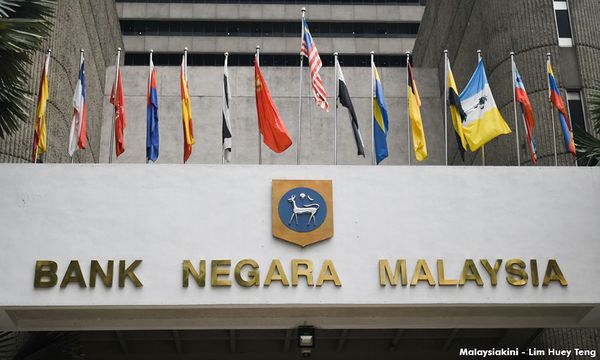
In a response to Malaysiakini, BNM said it expected all financial institutions to comply with applicable laws and regulations, warning that it would not hesitate to take enforcement action against identified weaknesses or breaches.
The central bank, however, declined to comment on specific findings in the leaked documents, citing confidentiality obligations.
Deutsche Bank has denied wrongdoing, claiming rogue 1MDB officials had misled it.
The bank said it had significantly strengthened its financial crime controls and invested €7 billion (RM31.51 billion) in its control environment between 2019 and 2025.
READ MORE:
PART I: How global banks helped Jho Low escape justice
PART II: Inside Deutsche Bank: A RM4.5 billion suit, Najib’s family, and Jho Low's man
PART III: Super yachts and a pink diamond: The 1MDB cover-up and its UAE connection





The problem is that there is an acute shortage of good compliance managers. Currently many banks use legal officers as their compliance staff but these legal staff are too legalistic and do not understand the business of banking. The net result we see either the customer service falls or it becomes too lenient to serve the bosses.
Report this comment
Are you sure you want to delete this comment?
This action cannot be undone.