


COMMENT | After welcoming Min Aung Hlaing, where does Anwar go from here?
COMMENT | The International Court of Justice's (ICJ) historic genocide judgment against Myanmar has put Malaysia’s diplomatic choices under scrutiny. Prime Minister Anwar Ibrahim may not have anticipated the ruling, but he cannot now ignore what it means for his government’s relationship with Myanmar’s military leadership.
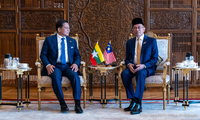
The judgment raises particularly uncomfortable questions about Anwar’s decision to welcome Myanmar’s military leader, Min Aung Hlaing, to Malaysia just six weeks ago.
In conversations following the ruling, former Klang MP Charles Santiago and political scientist Zakaria Ahmad were both sharply critical of Anwar’s handling of Myanmar.
Charles believes Malaysia went out of its way to endorse an illegitimate leader, extending diplomatic recognition and courtesies to someone whose military leadership was associated with the atrocities now established by the ICJ as genocide.
Malaysia, he argued, “owes the Rohingya an apology” for...
COMMENT | The International Court of Justice's (ICJ) historic genocide judgment against Myanmar has put Malaysia’s diplomatic choices under scrutiny. Prime Minister Anwar Ibrahim may not have anticipated the ruling, but he cannot now ignore what it means for his government’s relationship with Myanmar’s military leadership.
The judgment raises particularly uncomfortable questions about Anwar’s decision to welcome Myanmar’s military leader, Min Aung Hlaing, to Malaysia just six weeks ago.
In conversations following the ruling, former Klang MP Charles Santiago and political scientist Zakaria Ahmad were both sharply critical of Anwar’s handling of Myanmar.
Charles believes Malaysia went out of its way to endorse an illegitimate leader, extending diplomatic recognition and courtesies to someone whose military leadership was associated with the atrocities now established by the ICJ as genocide.
Malaysia, he argued, “owes the Rohingya an apology” for inviting Min Aung Hlaing and receiving him with state honours. It was, in his assessment, a low point for Malaysian foreign diplomacy.
His criticism is particularly pertinent given that civil society organisations had warned the government against the visit.
On Sept 23, a coalition of 166 organisations and more than 140 individuals issued a statement cautioning Anwar against engaging Min Aung Hlaing. Organised by the Bangkok-based Altsean-Burma, the statement specifically highlighted the International Criminal Court (ICC) prosecutor’s November 2024 application for an arrest warrant against him over the crimes against humanity of deportation and persecution of the Rohingya.
The judges’ decision has not been publicly announced. It remains unclear whether a warrant has been issued under seal. Nevertheless, the application was public knowledge. Malaysia could hardly claim it was unaware of the serious international legal questions surrounding its guest.
Zakaria was even more scathing about Anwar’s political judgment during our discussion.
“Anwar is focused on staying in power, and he’s willing to do anything, including invite Min Aung Hlaing to Malaysia,” he said.
His recommendation following the ICJ judgment is to sever all ties with Myanmar.
READ MORE: ICJ: Myanmar committed genocide against Rohingya
M’sia-Myanmar engagement
I quickly intervened with a question: if Malaysia closes every diplomatic channel, how does it continue to pressure Myanmar to implement the ICJ’s recommendations?
Zakaria’s lamented that Malaysia and Asean have been engaging Myanmar for years, including during Malaysia’s 2025 Asean chairmanship.
“But where has that engagement brought us? Has it translated into any tangible reform or progress?”
It is a question that deserves serious consideration. Cutting diplomatic ties altogether may not necessarily be the most effective response. Channels of communication remain important for humanitarian access, refugee protection and accountability.
But engagement cannot become an excuse for conferring legitimacy on a military leadership that has repeatedly disregarded international obligations.
The real question is what Malaysia’s engagement is intended to achieve, and what conditions it is prepared to impose.
This brings us to Anwar’s pledge to facilitate Myanmar’s eventual reintegration into Asean. During Min Aung Hlaing’s October visit, Anwar expressed Malaysia’s willingness to work towards bringing Myanmar back into the regional fold.
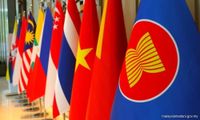
He then reiterated on Nov 16 that Myanmar should eventually regain full participation, provided peace and the safety of its people could be guaranteed. Will he now reconsider that position?
Asean has maintained restrictions on Myanmar’s military-backed leadership attending high-level political meetings pending meaningful progress on the Five-Point Consensus. Malaysia must not undermine that position through bilateral political accommodation.
The ICJ judgment makes it impossible to discuss Myanmar’s rehabilitation without addressing accountability for the Rohingya genocide.
For a community that has endured decades of persecution, statelessness and displacement, this is a landmark moment. Their suffering has finally been recognised at the highest level of international law.
Zahid’s ‘unfounded’ claim
Malaysia has since issued a public statement specifically responding to the judgment, offering little beyond diplomatic platitudes. The Philippines, meanwhile, has issued one welcoming the ruling.
The belated Malaysian response is particularly conspicuous given Anwar’s recent engagement with Min Aung Hlaing and Malaysia’s prominent role in Asean.
There is another development that raises serious questions about Malaysia’s handling of the Rohingya refugee situation. On Nov 20, Deputy Prime Minister Ahmad Zahid Hamidi announced that the cabinet had approved a proposal to resettle 10,000 Rohingya refugees from Malaysia in Türkiye through a three-to-six-month vocational training programme.
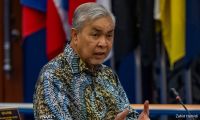
Zahid claimed that the Turkish government had agreed to receive the refugees and that Malaysia would work with Turkish authorities, UNHCR and relevant agencies on their selection, training and resettlement. He also said the process would take into account individual consent and international rules.
However, the announcement quickly unravelled. Zahid’s social media post was subsequently deleted, and Turkiye’s Directorate of Communications issued a statement dismissing claims that it would resettle 10,000 Rohingya refugees as “unfounded”, urging the public not to believe what it described as false information.
To add to the mystery, Agriculture and Food Security Minister Mohamad Sabu said the cabinet had not been informed about Zahid’s plan.
Binding and final judgment
The ICJ's historic finding of genocide should compel Malaysia to move beyond rhetoric and demonstrate genuine leadership in securing justice, protection and durable solutions for the Rohingya, rather than pursuing resettlement proposals that have yet to secure the agreement of the countries concerned.
The judgment is binding and final. Myanmar must fulfil its obligations under the Genocide Convention, including investigating and punishing perpetrators, preventing further violations and providing reparation. It must also facilitate the safe, voluntary and dignified return of displaced Rohingya.

Yet the court has no enforcement machinery of its own, pointed out Shyamala Alagendra, an international criminal law expert.
During our conversation on the ICJ ruling, she also said that implementing the judgment would be “challenging”. Myanmar has already dismissed the judgment as unfair, pointing to the nine-to-six vote and arguing that it was not unanimous.
Its response offers little indication that it intends to accept the judgment’s moral or political implications.
This is where Malaysia’s position becomes especially important.
Gaza and Rakhine state
Anwar has been among the most vocal international leaders condemning Israel’s actions in Gaza. He has described the devastation there as a test of our shared humanity and collective conscience, highlighting the deaths of children and infants, widespread hunger and forced displacement.
The ICJ has not yet issued a final judgment on whether Israel committed genocide in Gaza. The proceedings brought by South Africa remain ongoing and could take years to conclude. But the principle Anwar has repeatedly invoked applies regardless.
If genocide is a test of our collective conscience in Gaza, what is it in Rakhine state? Can Malaysia demand accountability in one part of the world while extending political courtesies to a military leadership responsible for genocide elsewhere?

Anwar did not know what the ICJ’s final judgment would be when he invited Min Aung Hlaing. But the warnings were already there: the ICC proceedings, the military coup, the continuing conflict and years of failed Asean engagement.
He now has an opportunity to correct course. That means clarifying Malaysia’s position on diplomatic relations, reconsidering its support for Myanmar’s political rehabilitation and committing to the full implementation of the ICJ judgment.
The Rohingyas have waited decades for the world to call their persecution by its true name. Malaysia must now decide whether its diplomacy will reflect that recognition.
Anwar has spoken often about moral leadership. The question is whether he is prepared to practise it when doing so is politically inconvenient.
MAHI RAMAKRISHNAN is a refugee rights activist and forced migration consultant who has little patience for anything that comes at the expense of human dignity.
The views expressed here are those of the author/contributor and do not necessarily represent the views of Malaysiakini.



Pmx aide care or dare to explain / justify ?
Report this comment
Are you sure you want to delete this comment?
This action cannot be undone.