


GPS dominance raises concerns over democratic checks and balances - analysts
SARAWAK POLLS | Gabungan Parti Sarawak’s (GPS) record 29 uncontested victories in the Sarawak election have raised concerns over democratic checks and balances, with analysts warning that a diminished opposition could weaken scrutiny of the state government.
Speaking to Malaysiakini, the analysts cautioned against equating uncontested victories with popular support and questioned whether GPS' backbenchers would be sufficiently independent to hold their government accountable.
Earlier today, the Election Commission confirmed that GPS had surpassed Sarawak's previous record of 19 uncontested victories, set in 1996.
Having secured 29 of the...
SARAWAK POLLS | Gabungan Parti Sarawak’s (GPS) record 29 uncontested victories in the Sarawak election have raised concerns over democratic checks and balances, with analysts warning that a diminished opposition could weaken scrutiny of the state government.
Speaking to Malaysiakini, the analysts cautioned against equating uncontested victories with popular support and questioned whether GPS' backbenchers would be sufficiently independent to hold their government accountable.
Earlier today, the Election Commission confirmed that GPS had surpassed Sarawak's previous record of 19 uncontested victories, set in 1996.
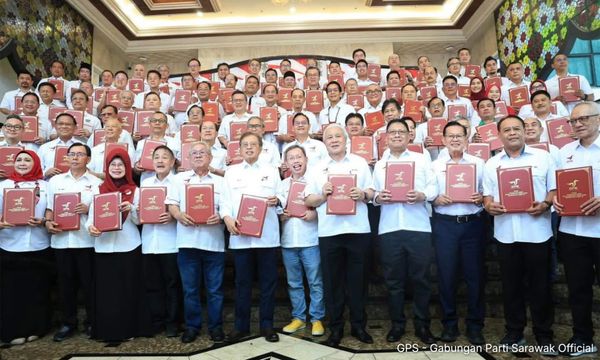
Having secured 29 of the state legislative assembly's 82 seats without a contest, GPS is just 13 seats short of a simple majority.
Among those returned unopposed were GPS chairperson and caretaker Sarawak premier Abang Johari Openg and his deputies, Awang Tengah Ali Hasan and Douglas Uggah Embas.
In contrast, all 82 seats were contested in the 2021 state election. GPS won 76 seats, while Parti Sarawak Bersatu (PSB) secured four and DAP two.
Political analyst Sivamurugan Pandian said a strong government could provide political stability, but not at the expense of democratic accountability.

"Without effective political competition, the accountability mechanism within the state assembly could become weaker," the Universiti Sains Malaysia academic stressed.
Sivamurugan said the uncontested victories reflected both GPS' organisational strength and the opposition's inability to provide a credible alternative, with the latter playing a bigger role.
Peninsula parties retreat
The decision by PKR, Amanah and Perikatan Nasional (including Bersatu) to sit out the polls had raised concerns over electoral competition in Sarawak.
DAP, which initially planned to contest 12 seats, subsequently announced two additional candidates in Senadin and Bawang Assan.
Its state chairperson Chong Chieng Jen said voters deserved a choice and stronger checks and balances.
Meanwhile, the Sarawak Native People's Party (PBDS) is contesting 29 seats and Parti Bumi Kenyalang (PBK) 17, alongside other smaller parties and independent candidates.
However, questions remain over whether they can fill the vacuum left by national parties.

Responding to the record number of uncontested victories, EC chairperson Ramlan Harun said the outcome was part of the democratic process.
Two days ago, Sarawak electoral watchdog Rise of Social Efforts (Rose) cautioned that uncontested victories deprive voters of the opportunity to assess incumbents, compare candidates and hold elected representatives accountable at the ballot box.
Return to single-coalition dominance
Political scientist Wong Chin Huat said the bigger concern was not the size of GPS' eventual majority, but whether the opposition would be nearly wiped out.
Wong also said signs of a weak opposition included the government's ability to push through controversial projects or remove opposition assemblypersons from the legislature for challenging it.
READ MORE: GPS' 29 seats walkovers come with heavy responsibility, says Abang Jo
He added that Sarawak was returning to the single-coalition dominance that characterised its politics before the 2006 state election, when national opposition parties made significant inroads.
"It (GPS) used to enjoy a one-party dominance, even more than BN at the federal level, until DAP and PKR won seven out of 71 seats in 2006.
"After the ups and downs the national opposition made in the past 20 years, GPS is successfully reshaping Sarawak back into a one-party state," he explained.

In the 2006 state election, Sarawak BN won 62 of the 71 seats. DAP secured six, PKR and Sarawak National Party (Snap) one each, while an independent candidate won the remaining seat.
GPS was formed in 2018 by four former Sarawak BN component parties - Parti Pesaka Bumiputera Bersatu (PBB), Sarawak United Peoples' Party (SUPP), Parti Rakyat Sarawak (PRS) and Progressive Democratic Party (PDP) - following BN's defeat at the federal level.
Can GPS keep itself in check?
International Islamic University Malaysia (IIUM) academic Syaza Shukri said the absence of several national parties meant GPS' electoral strength would not be fully tested.
She added that there was no way of knowing how voters would have responded if given a wider choice.
And without a strong opposition, Syaza said the responsibility of holding the state government accountable would increasingly fall on GPS backbenchers.
“The question is whether they (GPS lawmakers) would have sufficient political autonomy to do so,” Syaza stated.

She added that political competition could also increasingly shift from elections to within GPS itself, particularly over candidate selection.
Meanwhile, Wong pointed to structural factors that could further consolidate GPS' grip on power.
These included the absence of local elections, despite Sarawak not being bound by the Local Government Act 1976.
This, he said, eliminated the possibility of alternative political power centres at the local level.
He also noted that government assemblypersons in Sarawak receive RM8 million annually in constituency allocations, compared with RM4.3 million for government MPs in the state.
"This helps consolidate GPS' grip on voters, especially in less developed areas, and also its control of state assemblypersons, as the outspoken government backbenchers can be denied constituency allocation and lose electoral support," Wong added.
Beyond the legislature, Wong said the perception that the election was a "foregone conclusion" could dampen voter enthusiasm.
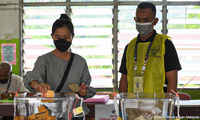
Wong said the situation also reflected deeper problems with the first-past-the-post electoral system, where votes for unsuccessful candidates do not translate into seats for their preferred parties.
Syaza similarly said voters in contested constituencies might see little reason to turn out if they believed the overall outcome had already been decided.
However, local issues and individual candidates' appeal could still motivate them to vote.
Federal bargaining power has limits
The analysts, however, offered differing views on whether GPS' growing dominance in Sarawak would translate into greater federal bargaining power ahead of the next general election.
Syaza said both sides of the federal political divide had an incentive to court GPS, given the absence of a comparable political force in Sarawak.
Sivamurugan said GPS' parliamentary strength and strategic position could reinforce Sarawak's influence in negotiations over the Malaysia Agreement 1963, fiscal autonomy and development allocations.
However, GPS was likely to prioritise Sarawak's interests rather than automatically align itself with any federal political bloc.
Wong, meanwhile, cautioned against assuming that a landslide state victory would prompt GPS to push for an early general election.
Based on voting patterns in the 15th general election, Wong outlined a hypothetical scenario in which BN and PN could collectively secure 122 parliamentary seats if they successfully consolidated their votes.
READ MORE: BN-PN tsunami could push Harapan to worst GE outcome since 2008, S'gor defeat
“This would allow them to form a federal government without the support of parties from Sabah and Sarawak,” he stated.
Such an outcome, Wong said, would undermine Sarawak's bargaining power, making it unlikely that GPS would favour an early general election.



BolehLand needs Boleh Voters. Voters yang Boleh Pikir. Voters yang Knowledge Boleh, Voters yang Malaysia Boleh and not Race Identity Boleh. Mana Boleh dapat cari?
Malaysia badly needs an Ombudsman and a Public Interest Litigation Act. This is where the people will serve as a check and balance. DO NOT be SOLELY dependent on the opposition. An opposition bench is a thing of the past when a situation arises, such as this GPS dominance or a similar situation in Terengganu. Merely lamenting the lack of opposition will not solve the problem. Look out the window and return the check-and-balance power to the voters/people. Many voters are much smarter than those being elected, whether as state assembly members or MPs. The time has come to slowly move away from the opposition bench, because there will come a time when the opposition will be too weak to serve as a check and balance. People and civil society should be the check and balance of the future.
We need to put a stop to the arrogance and lack of transparency and accountability of this GPS government by voting in all DAP and PBDS candidates. This may be the last chance for Sarawak to prevent it becoming a one party state, and returning to the totally corrupt days of Taib Mahmud.
Report this comment
Are you sure you want to delete this comment?
This action cannot be undone.