


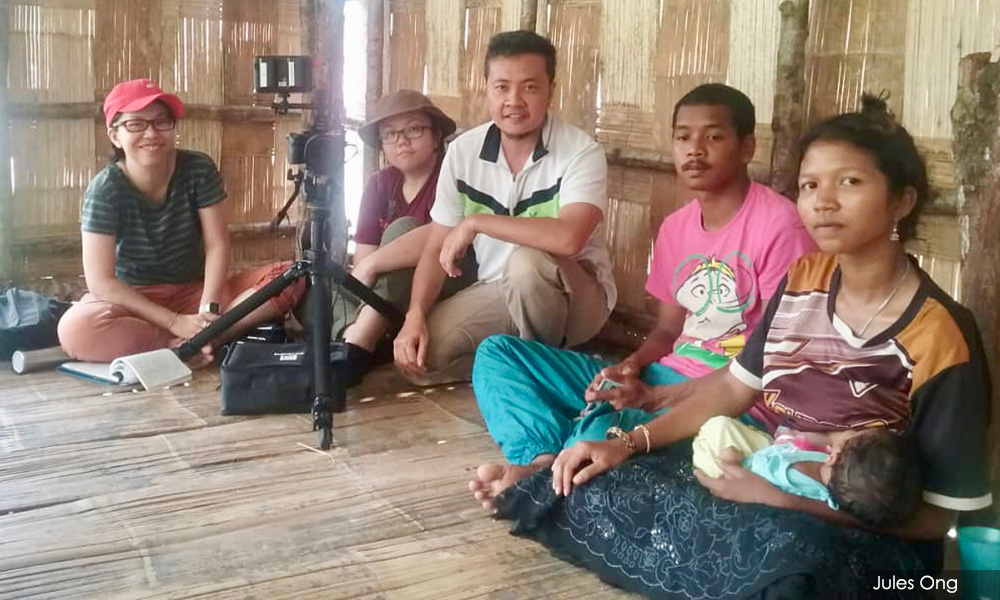

The video journalist helping Orang Asli save their lands
MALAYSIANSKINI | What is the role of a journalist?
For video journalist and documentary filmmaker Jules Rahman Ong, it is more than simply reporting people’s stories, or as he puts it, using them as “raw material” for one’s work.
Rather, he argues that journalists ought to bring to light injustices faced by those most marginalised in society.
Known for award-winning documentaries like Alice Lives Here, Ong has in recent years chosen to go a step further and serve the needs of those he engages with on the ground...
MALAYSIANSKINI | What is the role of a journalist?
For video journalist and documentary filmmaker Jules Rahman Ong, it is more than simply reporting people’s stories, or as he puts it, using them as “raw material” for one’s work.
Rather, he argues that journalists ought to bring to light injustices faced by those most marginalised in society.
Known for award-winning documentaries like Alice Lives Here, Ong has in recent years chosen to go a step further and serve the needs of those he engages with on the ground.
Coming face to face with the Rohingya refugee crisis when filming it in early 2016, he was struck by the large number of children arriving on Malaysian shores.
Ong and a friend thus decided to start the Rainbow of Love school in Selayang to provide a safe space for these children to learn the local language.
Two years on, the school now houses about 100 students, and is registered with the UN High Commissioner for Refugees (UNHCR).
Read more: KiniGuide to Orang Asli blockades in Gua Musang
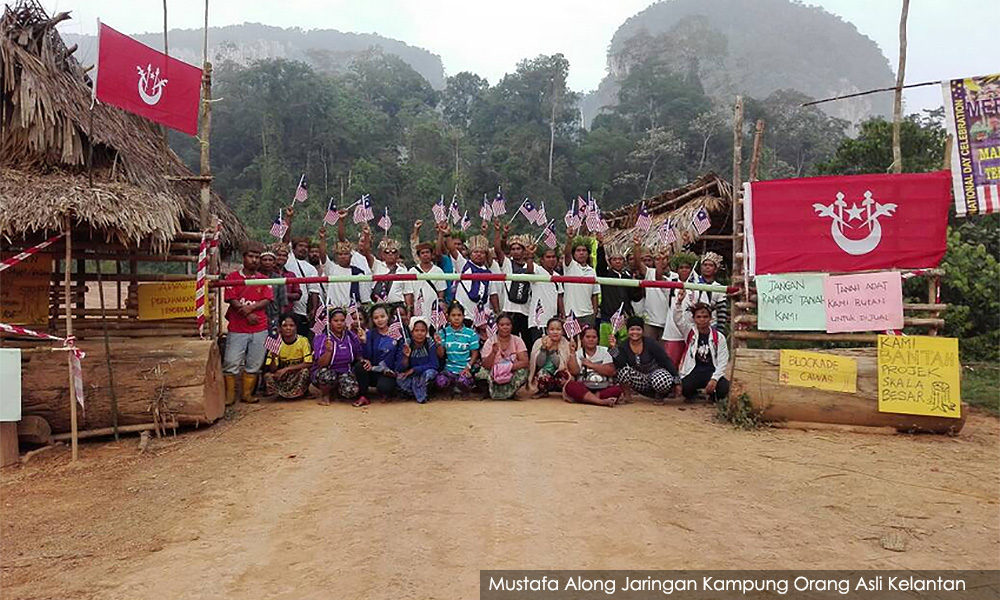
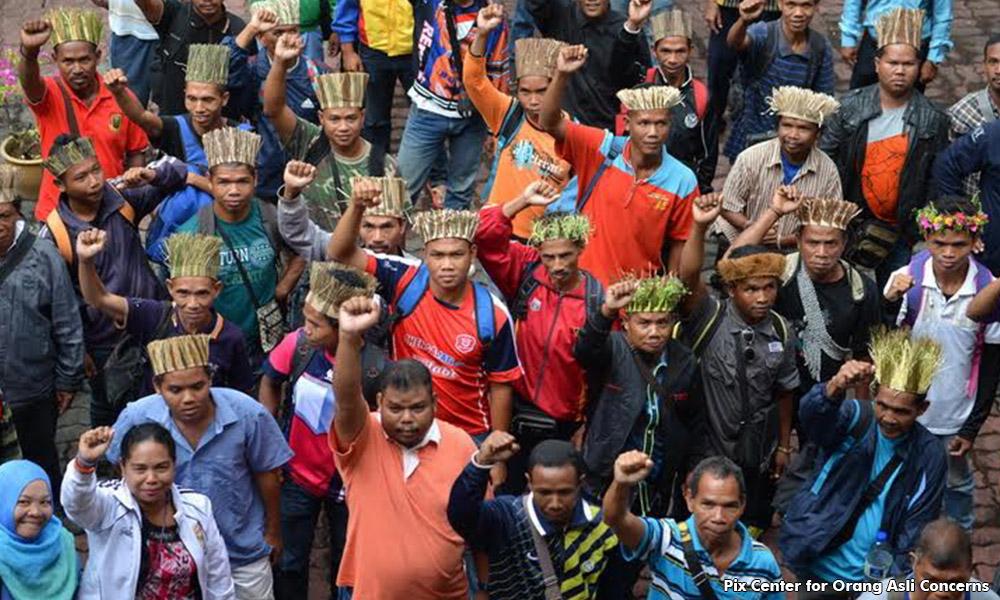
In late 2016, when news broke that 54 Temiar Orang Asli were arrested for setting up blockades in Gua Musang, Kelantan, Ong was once again on the ground documenting the issue.
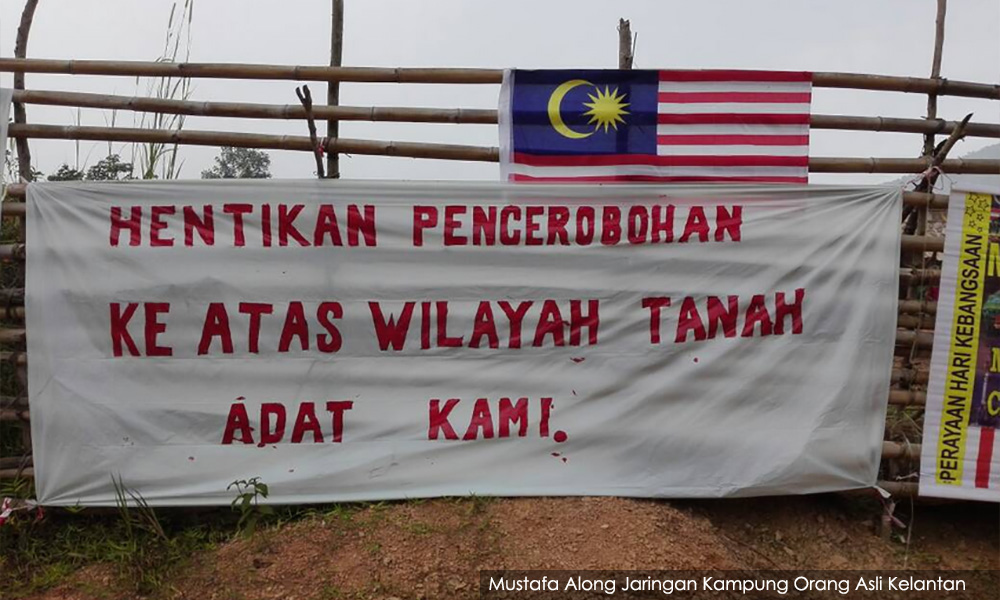
The Temiar people had built the blockades to keep loggers out of what they claim is their ancestral land – which authorities argue is a forest reserve where logging is permitted.
Receiving wind that the Kelantan Forestry Department would be demolishing the Cawas blockade, Ong and his cameraperson Chi Too headed there to film a documentary.
However, instead of capturing footage of the incident, they themselves ended up getting captured. Their arrest caused a national uproar and drew even more attention to the issue.
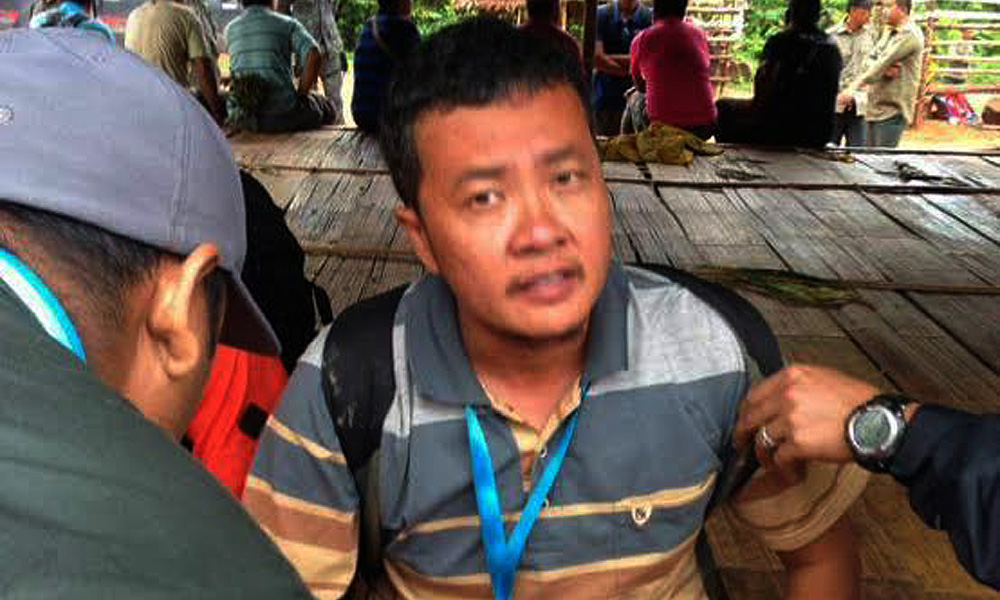
“There were Orang Asli around, they were taking pictures and sending them out. That’s how everybody knew about it!” Ong chuckled as he spoke to Malaysiakini at his home in Kajang recently.
In the years since his arrest, Ong has returned to Gua Musang numerous times, not only to film but also to assist the Temiar community in their struggle.
Here, he retells his ordeal with the Kelantan Forestry Department and explains why it spurred him to re-think his responsibility to the people he reports on:
They handcuffed us at the blockade itself. I told them we were not there to cut any branches or kill any animals, we were here to report and our only weapon was the camera.
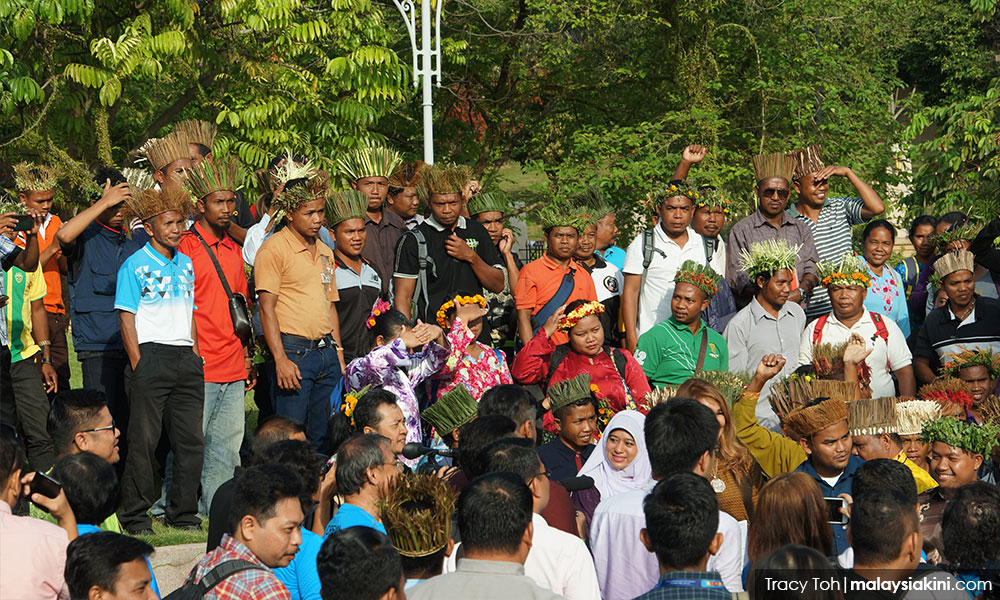
But they treated us as if we were poachers intruding on the forest reserve. It was a complete abuse of power.
There were 30 men in many four-wheeled drives surrounding us. They were shouting at us, being extremely uncivilised. They tried to grab our equipment but we hung onto it.
Later, they brought us to the police station, but only very late that night. Before that, they just questioned us for hours, asking us what were we doing there.
When we came out, we continued filming the documentary in Gua Musang. I had to complete this!
I was not going to go back without finishing my film.
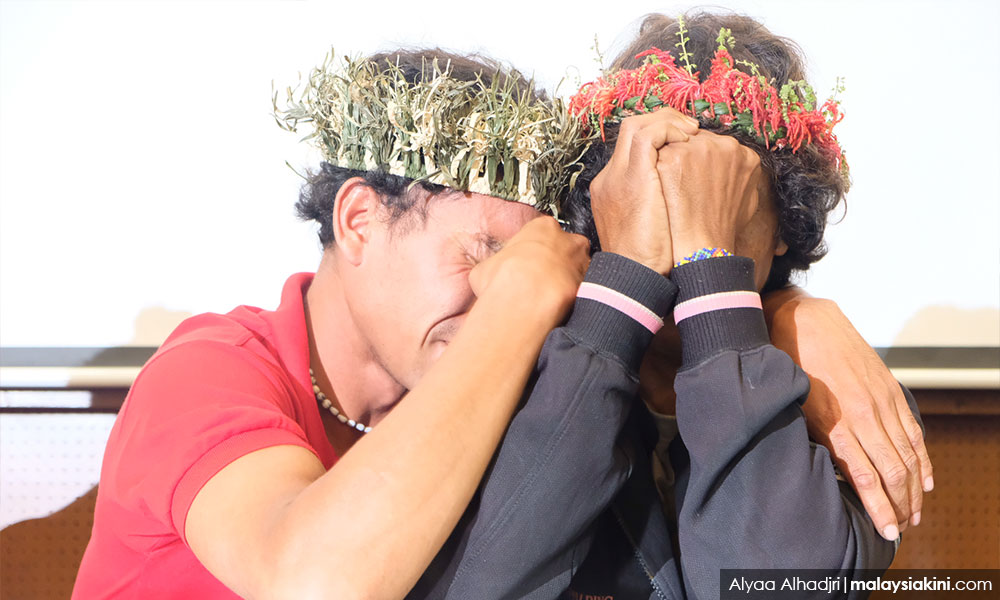
After that, I became quite connected to the community and their struggles. Nowadays, they can’t even hunt anything and they can’t observe their pantang larang (customs) anymore.
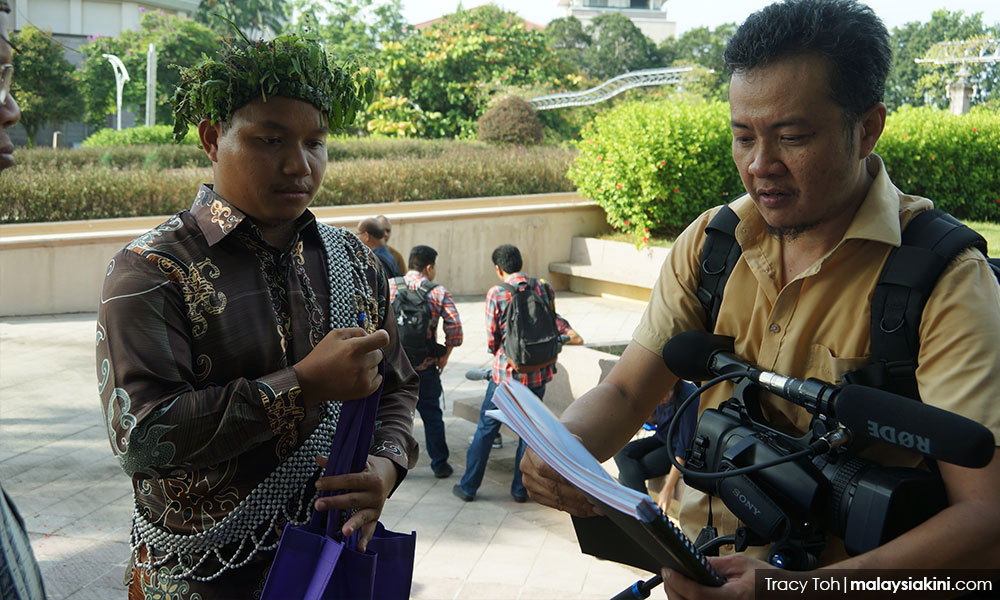
It’s sad that we are denying a people their way of life, their belief system and their religion.
I feel that if we were in their shoes, we would also fight for our rights to our land, and to our way of life. I would have done the same thing, I would have stood by the barricades.
This is not just an Orang Asli issue, it's a Malaysian issue. It is also a human rights, environmental, gender, education and heritage issue.
We need to stop seeing the Orang Asli as the 'other'. They are the oldest living people in Malaysia and their heritage is also our heritage.
Their land should be cordoned off and called a national heritage, it should be protected.
I have tried to help them in small ways. I started by collecting used handphones and laptops for them to write their stories down and do mapping, so they can claim their native customary land.
I have also started a Facebook group called Fighting For Our Forest where we raise funds and work very closely with grassroots leaders.
We are selling t-shirts and all the money goes to the Temiar for them to be able to do mapping.
In the next few weeks, they have to finish mapping their land so they can submit it to court and get it recognised as their native customary land.
My next documentary is my own and it is going to be about what the Temiar call the Centre of The Earth.
This lies very close to Gua Musang and is one of the Temiar’s most sacred sites, composed of limestone caves and rocks.
It is our national heritage but a dam is going to built and this will flood it.
I feel my skills and time are best devoted to people with so little power in society. I realise I need to be more responsible in how I report about people, to show true injustices that are really happening.
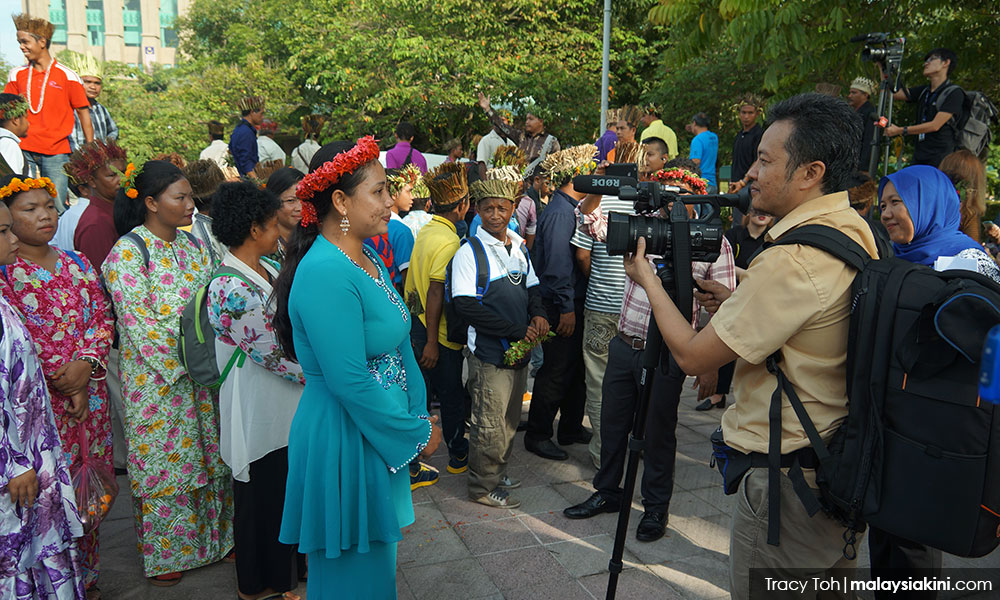
It’s very easy for the powerful, they just speak and it is reported like crazy. We should give space to the more marginalised to tell their stories.
People are not raw material, they are people who have given their time to tell their stories, to help make your documentary a success.
That’s why I have taken the decision to do more than just report and then move to another thing when I am done.
I think it's quite naive to say journalists do not have a stand on certain issues. Our profession demands that we take into account the other side, even though we do have a stand.
We can’t just be journalists and say we want to stay on neutral ground when people are dying, being oppressed and violated. We can’t just stand there and report.
I am first and foremost a human, then a journalist.
MALAYSIANS KINI is a series on Malaysians you should know.
PREVIOUSLY FEATURED
Heritage activist who promotes classic facets of Penang
Making games Malaysians can be proud of
'This is not poverty tourism': Helping KL's homeless find their strengths
The Malaysian giving cancer patients a lifeline
Human rights activist's journey through two eras of Dr M
Patriot’s Arshad defends country by speaking out against corruption
'I'm very clumsy, I fell into stand-up comedy'
Why Nasa scientist Amani chose M’sia over the stars
Working hard to revitalise country’s traditional arts
Living life in the face of muscular atrophy
Lighting the way for neglected girls
The rebel educator who seeks to enlighten people
Rendering aid to the Rohingya through education
Bringing a ray of hope for refugee children
M’sia's first woman BRT captain drives her way to top
The real Orked remembers sister Yasmin's life and career


Report this comment
Are you sure you want to delete this comment?
This action cannot be undone.